
You can reply to public reviews, but only with fact-limited, non-identifying language and documented approval when the review touches regulated services. That one rule covers healthcare, law, and financial services equally. The American Medical Association confirms that providers can respond to online reviews, but the moment a reply confirms a treatment relationship, names a diagnosis, or references account details, it crosses into regulated territory with real enforcement consequences.
Three model replies that hold up under scrutiny:
- Compliant neutral reply: "Thank you for sharing your experience. We take all feedback seriously and encourage you to contact our office directly so we can address your concerns."
- Privacy-safe acknowledgement: "We appreciate you reaching out. Patient privacy prevents us from discussing any specifics publicly, but please call us at your convenience."
- Escalation invitation: "We're sorry to hear your experience didn't meet expectations. Our patient relations team would welcome the opportunity to speak with you privately."
The non-negotiables for every regulated reply:
- Never include protected health information (PHI), client names, account numbers, or case details
- Never confirm or deny that a reviewer is or was a patient, client, or customer
- Never admit fault, offer compensation, or make performance claims in a public reply
- Keep the reply short, generic, and process-focused
- Move every substantive matter offline to a documented private channel
Pro Tip: Require one human approver for any reply that mentions allegations, references private data, or responds to a review rated three stars or below. A single approval gate on sensitive replies costs seconds and can prevent an enforcement action.
Key Takeaways
Compliance in review responses for regulated industries comes down to one repeatable discipline: keep public replies generic, route sensitive reviews to a named human approver, and document every decision in a searchable audit trail.
| Point | Details |
|---|---|
| Generic language only | Never confirm patient, client, or account identity in any public reply. |
| Industry-specific rules apply | HIPAA, FINRA Rule 2210, SEC Marketing Rule, and ABA Model Rules each create distinct obligations for public replies. |
| Approval workflows are structural controls | Every medium- and high-risk reply needs a named human approver before it is posted. |
| Audit trails are non-negotiable | Log the review, the reply text, the approver, and timestamps; retain records for 7–10 years for regulated matters. |
| Localreviewreply | Provides template libraries, approval routing, and audit logging designed for teams managing reviews at scale. |
Table of Contents
- What compliance in review responses actually requires: the regulatory map
- HIPAA and healthcare: what you can and cannot say publicly
- Financial services: SEC, FINRA, and the recordkeeping trap
- Attorney and law-firm ethics: bar rules, privilege, and what not to say publicly
- How to build compliant templates, approval flows, and escalation routing
- Escalation triggers and what your audit trail must capture
- When state rules differ and when to get counsel involved
- Safe reply examples, unsafe redactions, and a style checklist
- Operationalizing at scale: automation, human oversight, and where the line sits
- The compliance trap most regulated businesses walk into
- Localreviewreply keeps your reply program defensible at every step
- Sources
- FAQ
What compliance in review responses actually requires: the regulatory map
Several primary regulators have direct authority over how businesses in healthcare, law, and finance communicate publicly, and a public review reply qualifies as a public communication under most of their frameworks.
The core frameworks:
- HIPAA / HHS Office for Civil Rights (OCR): Governs protected health information. A reply that confirms a patient's identity or treatment details is a potential PHI disclosure.
- FINRA Rule 2210: Regulates broker-dealer communications with the public, including approval and recordkeeping requirements for content that resembles advertising or testimonials.
- SEC Marketing Rule: Governs investment adviser communications; public replies referencing client outcomes or advice can trigger advertising and recordkeeping obligations.
- ABA Model Rules / State Bar Ethics Rules: Govern attorney conduct, including confidentiality (Rule 1.6), advertising (Rules 7.1–7.3), and the prohibition on disclosing client information without consent.
- FTC Consumer Reviews Rule (effective October 2024): Creates enforceable prohibitions on review gating, suppression of negative reviews, and undisclosed incentivized reviews.
| Regulator | Core risk area | Primary trigger in a reply |
|---|---|---|
| HHS / OCR (HIPAA) | Patient privacy / PHI disclosure | Confirming patient identity or treatment |
| FINRA | Advertising, recordkeeping | Replies resembling testimonials or performance claims |
| SEC | Marketing, recordkeeping | References to client outcomes or investment advice |
| ABA / State Bar | Confidentiality, solicitation | Confirming representation or discussing case facts |
| FTC | Consumer protection | Review gating, undisclosed incentives |
HHS/OCR enforcement history shows that corrective action agreements have resulted from public disclosures of patient information, including in online communications. FINRA has fined broker-dealers for inadequate supervision of public communications, and state bars have issued formal discipline for attorneys who disclosed client information in public forums. These are not theoretical risks.
The FTC's Consumer Reviews Rule adds a layer that many regulated businesses overlook: suppressing negative reviews or offering incentives without disclosure creates separate federal exposure, independent of any industry-specific regulator.
HIPAA and healthcare: what you can and cannot say publicly
The core HIPAA rule for review replies is blunter than most providers expect. Even confirming that someone was a patient at your practice can constitute a PHI disclosure under 45 C.F.R. § 164.502. The HHS/OCR guidance makes clear that the combination of a person's identity and their association with a healthcare provider is itself protected information.

The AMA's published guidance dispels the common myth that physicians simply cannot respond online. They can. The constraint is how: use generic, process-focused language that applies to any patient, and never reference the reviewer's specific situation.
Do:
- Thank the reviewer generically for their feedback
- Describe your general process for handling concerns ("We take all patient feedback seriously and encourage direct contact with our patient relations team")
- Invite the reviewer to call or email a specific, private contact
- Keep the reply to two or three sentences
Don't:
- Confirm or deny the reviewer was ever a patient
- Reference any diagnosis, treatment, medication, appointment date, or clinical outcome
- Use the reviewer's name in the reply
- Respond defensively to clinical allegations in a public post
Two healthcare-safe reply templates:
Positive review: "Thank you so much for the kind words. Our team works hard to provide a welcoming experience, and feedback like yours means a great deal. We look forward to seeing you again."
Negative review: "We appreciate you sharing your concerns. Patient privacy prevents us from discussing any specifics here, but we'd genuinely like to understand your experience. Please contact our patient relations team at [phone/email] so we can follow up properly."
The one-line scripting rule for staff: never write anything in a public reply that you would not say to a stranger who has no connection to the practice.
Escalate immediately to your privacy officer or legal counsel when a review contains a patient's full name, a specific diagnosis or treatment detail, a clinical outcome allegation, or any information that could identify the patient even without their name. Clinical and privacy literature consistently flags these as the highest-risk disclosure scenarios, a point reinforced by specialty clinical journals that have examined the reputational and legal consequences of public patient-provider exchanges.
Mental health providers, social workers, and counselors face the same constraints under their own ethics codes. The National Association of Social Workers Code of Ethics and the APA Ethics Code both require that public communications never identify or discuss a client's care. The same generic, process-focused reply standard applies.
Pro Tip: Draft a single HIPAA-safe reply template for your most common negative review type and have your privacy officer approve it once. Staff then adapt only the greeting and the contact method, never the substantive language.
Financial services: SEC, FINRA, and the recordkeeping trap
Financial firms face a compliance layer that healthcare providers often don't: the recordkeeping obligation. Under FINRA Rule 2210, broker-dealer communications with the public require prior principal approval and must be retained as business records. A public Google reply that reads like a testimonial, references a client's returns, or implies investment advice can fall squarely within that rule's scope.
The SEC's marketing and communications guidance adds a parallel obligation for registered investment advisers: public statements that reference client outcomes, performance, or specific advice can trigger the Marketing Rule under the Investment Advisers Act. A reply as short as "Glad we helped you reach your retirement goals!" could constitute a testimonial under that framework, requiring disclosures and recordkeeping that most firms are not set up to handle in a review-reply workflow.
Reply controls checklist for financial firms:
- Never reference a client's account, balance, returns, or investment outcomes in a public reply
- Never confirm or deny that the reviewer is a current or former client
- Never make forward-looking statements or imply guaranteed results
- Route any reply mentioning fraud allegations, promised returns, or litigation threats to compliance and legal before posting
- Retain a copy of every public reply, the review it responds to, and the approval chain
Recordkeeping fields to log for each reply:
- Date and time of the original review
- Platform and URL
- Date and time the reply was posted
- Name of the staff member who drafted the reply
- Name of the compliance approver
- Full text of the reply as posted
- Any internal escalation notes
Two safe reply templates for financial firms:
Neutral acknowledgement: "Thank you for taking the time to share your experience. We value all client feedback and are committed to providing quality service. Please contact our client services team directly if there is anything we can help address."
Escalation invitation: "We take concerns like this seriously and want to make sure they are handled properly. Please reach out to our compliance team at [contact] so we can look into this thoroughly."
Involve compliance or legal before posting whenever a review alleges fraud, references specific account transactions, mentions promised returns, or signals potential litigation. The cost of a 24-hour hold for legal review is trivial compared to the cost of a FINRA enforcement inquiry.
Attorney and law-firm ethics: bar rules, privilege, and what not to say publicly
Law firms operate under a distinct set of constraints that go beyond privacy. ABA Model Rule 1.6 prohibits disclosing information relating to the representation of a client without informed consent. A public reply that confirms someone was a client, describes the nature of their matter, or references case facts is a potential Rule 1.6 violation, regardless of whether the information seems innocuous.
ABA Model Rules 7.1 through 7.3 govern attorney advertising and solicitation. A reply that reads as an invitation to engage the firm, or that makes comparative claims about the firm's results, can implicate those rules. State bars vary significantly in how they apply advertising rules to online content, and some treat public review replies as advertising subject to filing or disclaimer requirements.
Do/Don't for attorney replies:
- Do use "our firm" rather than "you" when referencing the reviewer ("Our firm takes all concerns seriously" rather than "We understand you had a difficult experience with your case")
- Do keep the reply entirely generic and process-focused
- Do invite the reviewer to contact the firm privately through a named contact
- Don't confirm or deny that the reviewer was a client or that the firm handled their matter
- Don't reference any facts about the case, outcome, or legal strategy
- Don't offer to negotiate, apologize for case outcomes, or make any admission that could be used in subsequent proceedings
- Don't respond to allegations of malpractice or misconduct in the public reply itself
Two privilege-safe sample replies for law firms:
Positive review: "Thank you for the kind words. Our firm is committed to providing attentive, professional service, and we appreciate you taking the time to share your experience."
Negative review: "Our firm takes all feedback seriously. We are unable to discuss any specifics publicly, but we encourage you to contact [name/title] directly at [contact] so we can address your concerns appropriately."
The phrase-substitution rule: replace any second-person reference to the reviewer's specific situation ("your case," "your matter," "when you came to us") with a generic third-person or firm-focused phrase ("our process," "our standard practice," "matters of this type"). That single substitution eliminates most confidentiality risk in a draft reply.
Defer to counsel or avoid a public reply entirely when a review contains allegations of malpractice, disciplinary complaints, or threats of bar grievances. Some state bar ethics opinions advise against any public reply to a grievance-related review; others permit a narrow factual correction. Because the rules vary by jurisdiction, a novel or high-stakes allegation warrants a call to your state bar's ethics hotline or outside counsel before you post anything.
Pro Tip: Build a "no-reply" category into your approval workflow for reviews that allege malpractice or reference a bar complaint. The default action is no public reply, with an internal note documenting the decision and the reason.
How to build compliant templates, approval flows, and escalation routing
A compliant reply program is not a folder of sample text. It is a governed process with defined categories, approval levels, and a documented decision path for every review type.
Template categories to maintain:
- Positive/five-star: Generic thank-you, no client-identifying language, brief and warm
- Neutral/three-to-four-star: Acknowledgement of mixed feedback, invitation to contact privately
- Negative service complaint: Process-focused acknowledgement, no admission, private contact invitation
- Allegation-sensitive: Minimal public text, immediate escalation to compliance or legal
- HIPAA-safe (healthcare): Generic language only, no PHI, privacy officer pre-approved
- Privilege-safe (legal): No client confirmation, no case facts, bar-rule reviewed
What every template must include:
- A generic thank-you or acknowledgement
- A process-focused statement about how the firm handles concerns
- A private contact method (phone, email, or named contact)
- Approval status and the name of the approver in the internal record
What every template must never include:
- PHI, client names, account numbers, or case identifiers
- Admissions of fault, apologies for specific outcomes, or compensation offers
- Performance claims, return figures, or outcome comparisons
- Any language that confirms the reviewer's relationship with the firm
Approval workflow mapping:
| Review risk level | Approval required | Action |
|---|---|---|
| Low (positive, generic) | Team lead or manager | Post after single approval |
| Medium (negative service, no allegation) | Compliance-designated approver | Post after review, log reply |
| High (allegation, PHI risk, litigation signal) | Legal or compliance officer | Hold, escalate, document decision |
| Critical (malpractice, fraud, bar complaint) | Outside counsel or senior leadership | No public reply without explicit sign-off |
Internal roles for a defensible approval trail:
- Drafter: The staff member who writes the initial reply (often automated or templated)
- First approver: Team lead or practice manager who checks tone and template compliance
- Compliance approver: Designated compliance officer or privacy officer for medium/high-risk reviews
- Legal sign-off: Required for critical-risk reviews; documented in the audit log
Pro Tip: Assign a single named compliance approver per location or practice area. Shared approval queues with no named owner are where replies slip through without review. One name, one accountability.
Escalation triggers and what your audit trail must capture
Escalation is not a judgment call. It should be a checklist. When any of the following appear in a review, the reply goes to a compliance or legal approver before anything is posted.
Escalation triggers:
- The review contains a patient's full name, diagnosis, treatment detail, or clinical outcome
- The review alleges fraud, misrepresentation, or criminal conduct
- The review references a specific account, transaction, or investment outcome
- The review mentions a bar complaint, malpractice claim, or pending litigation
- Multiple similar reviews appear in a short window (possible coordinated campaign or fake reviews)
- The review appears to be fake or incentivized by a competitor
For suspected fake or policy-violating reviews, the first step is to evaluate whether to report the review or reply to it — sometimes the right answer is neither a reply nor silence, but a formal platform flag.
Minimum audit-trail fields for each review and reply:
- Review platform and direct URL
- Date and time of the original review
- Reviewer display name (as shown publicly)
- Star rating
- Full text of the review (screenshot and text copy)
- Risk classification assigned at intake
- Name of the staff member who drafted the reply
- Name and role of each approver
- Date and time of each approval
- Full text of the reply as posted
- Any escalation notes, hold decisions, or legal consultation records
- Date and time the reply was published
Retain these records in a searchable format. For matters touching professional discipline, HIPAA enforcement, or FINRA/SEC review, a 7–10 year retention period is a defensible baseline, though your specific regulatory obligations and state law may require longer. The goal is to be able to reconstruct the full decision chain for any reply if a regulator or bar investigator asks.
Pro Tip: Tag each audit record with the review's risk classification at intake. A searchable field for "allegation type" or "escalation reason" lets your compliance team pull all high-risk replies in seconds during an inquiry, rather than reviewing every record manually.
When state rules differ and when to get counsel involved
Federal frameworks set the floor, but state rules frequently raise it. State bar ethics opinions on review replies vary more than most attorneys expect, and the differences matter operationally.
Common state-variation areas:
- Some state bars classify public review replies as attorney advertising, triggering filing requirements or mandatory disclaimers
- Some bar opinions differ on whether a generic "thank you for being a client" reply constitutes a confidentiality breach
- California, New York, Florida, and Texas have issued specific guidance or opinions on social media and online communications that go beyond ABA Model Rules
- Some states require that any attorney advertising include specific disclaimers about past results not guaranteeing future outcomes, which could apply to a reply that references a successful case
- State privacy laws (California's CMIA, for example) may impose additional restrictions on healthcare providers beyond federal HIPAA minimums
When to seek state-specific legal review:
Seek outside counsel or contact your state bar's ethics hotline before posting when: a review contains a novel allegation you have not encountered before; the review signals a disciplinary inquiry or regulatory investigation; your firm operates across multiple states with different bar rules; or a healthcare reply involves a state with stricter privacy laws than HIPAA's federal baseline.
The ABA's formal ethics opinions and state bar ethics committees publish guidance that is often more specific than the Model Rules themselves. Checking your state bar's published opinions before finalizing a reply policy costs an afternoon and can prevent a disciplinary complaint.
Safe reply examples, unsafe redactions, and a style checklist
The examples below are grouped by context. Each is short, generic, and designed to be adapted with minimal editing.
Safe public replies by context
Positive review (all industries): "Thank you for the kind words. We genuinely appreciate you taking the time to share your experience, and we look forward to continuing to serve you."
Neutral/mixed review (all industries): "Thank you for your honest feedback. We take all comments seriously and would welcome the opportunity to speak with you directly. Please contact us at [phone/email]."
Negative service complaint (healthcare): "We're sorry to hear your visit didn't meet your expectations. We'd like to understand more, but patient privacy prevents us from discussing details here. Please reach out to our patient relations team at [contact]."
Negative service complaint (financial): "We appreciate you sharing your concerns. Our client services team takes feedback like this seriously and would like to connect with you directly. Please contact us at [contact]."
Allegation-sensitive (law firm): "Our firm takes all concerns seriously. We are unable to address specifics in a public forum, but we encourage you to contact [name] at [contact] so this can be handled appropriately."
Unsafe examples with callouts
❌ "Hi [Patient Name], I'm sorry your surgery recovery was more difficult than expected. We did everything we could given your condition." Why it fails: Names the patient, references a specific procedure, and implies a clinical judgment. This is a PHI disclosure and a potential HIPAA violation.
❌ "We're glad we helped you grow your portfolio by 18% last year. Thanks for trusting us with your retirement savings." Why it fails: References specific client returns and confirms the client relationship. Triggers FINRA and SEC advertising and recordkeeping rules.
❌ "We represented you and we won your case. Sorry you feel that way about the billing." Why it fails: Confirms the representation and references case facts. Violates ABA Model Rule 1.6 and potentially Rule 7.1.
Style checklist for public replies
- Keep replies to 2–4 sentences
- Use "our firm," "our team," or "our practice," not "you" when referencing the reviewer's specific situation
- Always include a private contact method
- Never use the reviewer's name
- Avoid defensive or emotional language
- Invite the matter offline; never negotiate or investigate publicly
| Feature | Safe reply | Unsafe reply |
|---|---|---|
| Patient/client identity | Never confirmed or referenced | Names or confirms the reviewer |
| Clinical or account details | Absent entirely | References treatment, diagnosis, or account |
| Tone | Neutral, process-focused | Defensive, apologetic for specific outcomes |
| Length | 2–4 sentences | Extended explanation or rebuttal |
| Resolution path | Invites private contact | Negotiates or investigates publicly |
| Admissions | None | Admits fault or offers compensation |
For industry-specific template language beyond regulated sectors, pre-built response templates can serve as a starting point for tone and structure before your compliance team adapts the language.
Operationalizing at scale: automation, human oversight, and where the line sits
Automation can do a great deal in a compliant review-reply program. It cannot do everything, and confusing the two is where regulated businesses create liability.
What automation handles well:
- Drafting initial replies from pre-approved template categories
- Flagging reviews that contain trigger words (diagnosis terms, account references, allegation language) for human review
- Routing reviews to the correct approval tier based on star rating, keyword, or location
- Logging review metadata and reply drafts to the audit trail automatically
- Sending approval notifications to the designated approver
What must remain human-reviewed:
- Final privacy check before any reply is posted
- Approval of all medium- and high-risk replies
- Any reply that deviates from a pre-approved template
- Escalation decisions for allegation-sensitive or critical-risk reviews
- The decision to post no reply at all
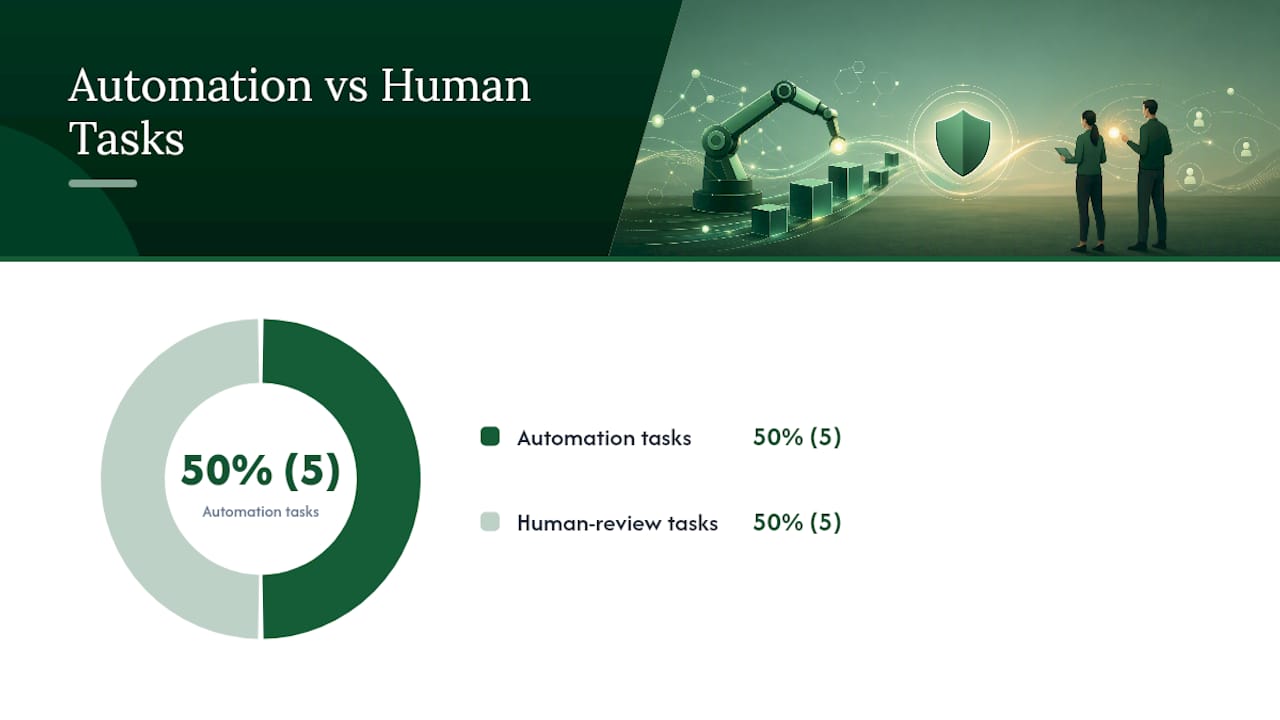
The operational principle that holds across all regulated industries: the compliant public reply is not the investigation. It is an acknowledgement. The investigation, the facts, and the resolution all happen in private, documented channels. Keeping that distinction clear in your workflow design prevents the most common compliance failures.
For multi-location operators and franchises, role-based permissions matter as much as templates. A location-level staff member should be able to draft and submit a reply but not publish it without approval. Approval workflow controls that enforce that separation by role are a structural compliance control, not just an operational convenience.
Agencies managing reviews for regulated clients carry the same obligations. A white-label review management setup for a healthcare or financial services client needs the same template governance and approval routing as an in-house program, with clear documentation of who approved what and when.
Pro Tip: Treat every AI-drafted reply as a first draft, not a final product. The automation's job is to save the drafter time; the human approver's job is to catch what the automation cannot: a subtle PHI risk, a tone that reads as an admission, or a phrase that a regulator would read as advertising.
The compliance trap most regulated businesses walk into
The most common mistake in review-reply compliance is not the egregious one. It is not a provider naming a diagnosis or an attorney describing a case outcome. Those errors are obvious enough that most teams catch them.
The real trap is the well-intentioned reply that tries too hard to be helpful. A healthcare practice that writes "We're sorry your experience with our physical therapy team wasn't what you hoped" has just confirmed the reviewer's treatment relationship and the clinical service. A financial adviser who writes "We understand your frustration with how your account was handled last quarter" has confirmed the client relationship and referenced a specific time period. Neither reply looks dangerous on first read. Both are.
The conservative default is not a failure of customer service. It is the correct professional standard. Regulators and bar investigators do not give credit for good intentions; they evaluate what was disclosed. A reply that says nothing specific and invites private contact protects the business, the reviewer, and the professional relationship far better than a reply that tries to address the concern publicly.
The practical rule worth building into every training session: if a reply answers a question the reviewer did not ask publicly, it probably discloses something it should not. Stick to acknowledgement, process, and a private contact path. Everything else belongs offline.
Localreviewreply keeps your reply program defensible at every step
Regulated businesses need more than a folder of templates. They need a system where the right reply reaches the right approver before it ever goes public, and where every decision is logged.
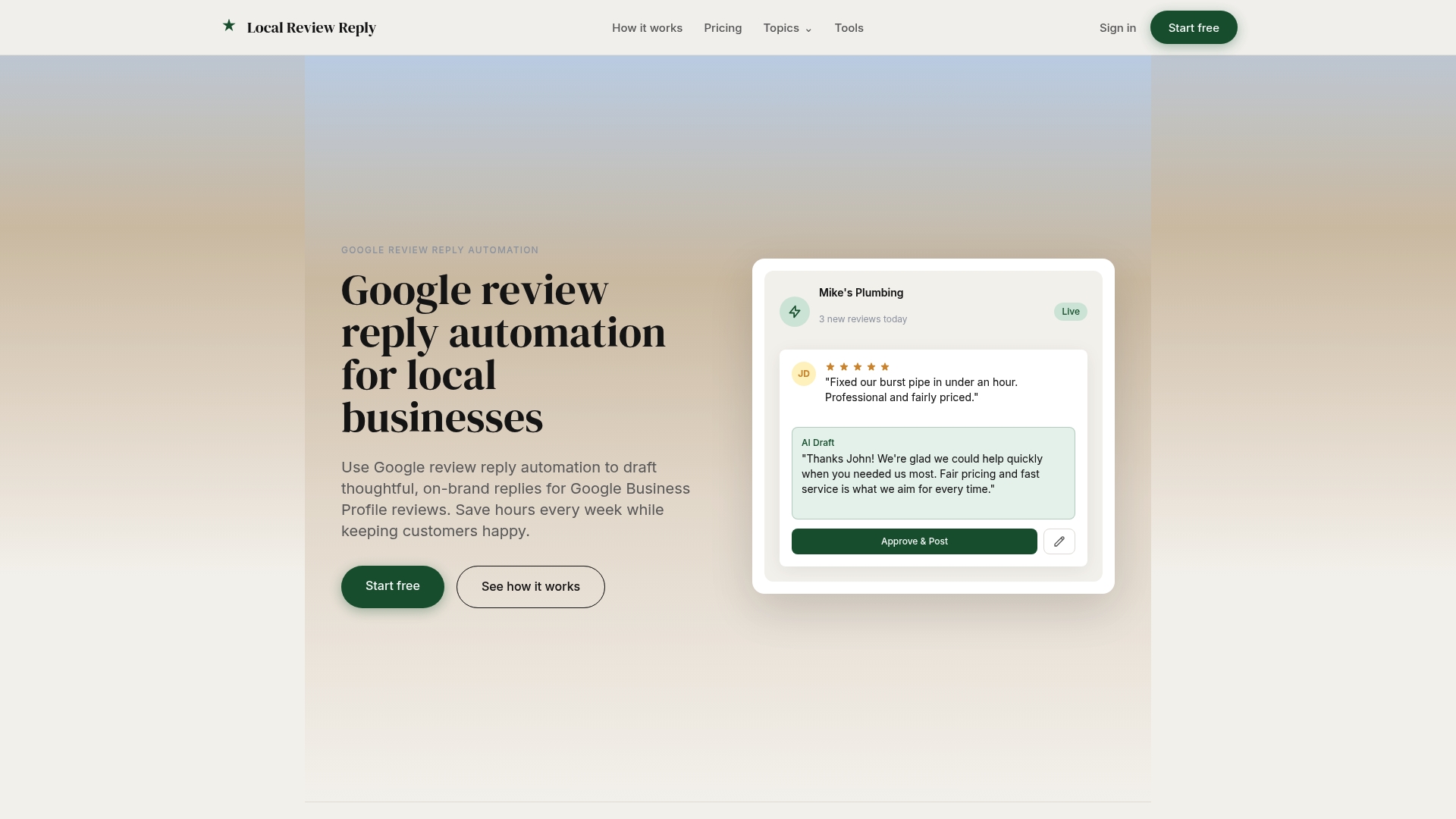
Localreviewreply drafts personalized, on-brand replies from your pre-approved template library, then routes sensitive and low-star reviews through a configurable approval workflow before anything is posted. Role-based permissions keep location-level staff in the drafting lane and compliance approvers in the sign-off lane. Every reply, every approval, and every timestamp is captured in the audit log, giving your compliance team the documentation trail regulators and bar investigators expect. For multi-location operators and agencies, the same controls scale across every location without rebuilding the workflow from scratch.
Start a free trial at Localreviewreply and see how the approval and template controls work before you commit to a plan.
Sources
Primary regulator pages and guidance documents cited in this article, for teams that want to read the source language directly:
- American Medical Association — Myth or fact: physicians can’t respond online to patients
- HHS / OCR — HIPAA compliance and enforcement resources
- SEC — Marketing and communications FAQ for investment advisers
This article provides general informational guidance and does not constitute legal, compliance, or professional advice. Confirm current regulatory requirements with the applicable primary source or a qualified attorney before implementing any reply policy.
This article is general information, not a substitute for advice from a qualified lawyer. Consult a qualified legal professional about your own circumstances before acting on anything here.
FAQ
Can a healthcare provider respond to a negative Google review? Yes. The AMA confirms that providers may respond publicly. The constraint is content: use generic, process-focused language, never confirm the reviewer's patient status, and never reference any clinical detail. Invite the matter to a private channel.
What does HIPAA say about responding to patient reviews? HIPAA does not prohibit replies, but it prohibits disclosing PHI. Because confirming that someone is a patient counts as PHI under 45 C.F.R. § 164.502, any reply that acknowledges the treatment relationship is a potential violation. HHS/OCR has taken enforcement action based on public disclosures in online communications.
Do FINRA rules apply to a broker-dealer's Google review replies? They can. FINRA Rule 2210 covers communications with the public, and a reply that resembles a testimonial, references client returns, or implies investment advice may fall within its scope, triggering prior principal approval and recordkeeping requirements.
What is the safest reply for a law firm responding to a negative review? A two-sentence reply that thanks the reviewer for their feedback, states that the firm cannot discuss specifics publicly, and provides a private contact. Never confirm representation, reference case facts, or address allegations publicly.
How long should regulated businesses retain review reply records? A 7–10 year retention baseline is defensible for matters touching professional discipline or regulatory enforcement. Your specific obligations depend on your industry, state law, and the nature of the underlying matter. Consult counsel for your exact retention schedule.
What triggers an escalation before posting a reply? Escalate before posting whenever a review contains PHI, alleges fraud or malpractice, references a specific account or transaction, mentions litigation or a bar complaint, or appears to be part of a coordinated fake-review campaign.
Does the FTC Consumer Reviews Rule affect how regulated businesses solicit reviews? Yes. The rule, effective October 2024, prohibits review gating (showing the review request only to customers you expect to rate you positively) and undisclosed incentivized reviews. These prohibitions apply independently of any industry-specific regulator.