
Yes, emojis can help when you reply to reviews, but only sparingly and only when they support, rather than replace, your message. Use one emoji for upbeat or light neutral feedback, and skip them entirely for complaints, safety issues, or anything medical or legal. The rule that matters most: match the emoji's tone to the review's tone, and never let an emoji stand in for an apology or a clear next step.
TL;DR:
- Use a single, positive emoji after clear, positive or neutral reviews to reinforce the message, avoiding emojis in negative or safety-related replies.
- Match the emoji's tone to the review's tone, and limit to one per reply to prevent ambiguity or clutter, especially on platforms with different emoji renderings.
- Avoid using emojis like 🤗 for comforting customers due to their ambiguous meaning and potential misinterpretation across platforms.
- Implement approval workflows that restrict emojis in low-star reviews or sensitive cases, and test policies with pilot locations before scaling.
- Rely on research showing that congruent emoji increase perceived warmth and modernity, but only when they reinforce the message, not replace or contradict it.
Table of Contents
- Practical rules for when to use emojis and when to avoid them
- What research says about emoji and brand perception
- Emoji meaning and ambiguity across platforms
- Templates for positive, neutral, and sensitive negative reviews
- Handling offensive emoji and platform policy violations
- Scaling emoji use with clear approval workflows
- Testing emoji rules in live operations
- How software can help apply these rules at scale
- FAQ
- Sources
Practical rules for when to use emojis and when to avoid them
Review replies work best when the emoji choice follows the review's own tone, not the other way around. A short checklist keeps this consistent across a team:
- Use emojis only in clearly positive or light neutral replies, never in negative, safety, legal, or medical contexts.
- Keep it to one emoji per reply, placed after a sentence that already makes your point clearly.
- Match emoji valence to review valence: a celebratory review gets an upbeat emoji, a measured review gets none or something neutral.
- Never let an emoji replace required remediation language, like an apology or instructions to contact support.
- Build a short brand whitelist (a handful of approved emojis) and a blacklist (anything ambiguous or informal), and note that screen readers announce emoji names aloud, so excess emoji use can clutter the experience for those readers.
Pro Tip: Write the full sentence first, then decide if an emoji adds anything. If the sentence already reads clearly without it, leave it out.
What research says about emoji and brand perception
Experimental work on emoji in brand communication gives a reasonably consistent picture: emoji help when they echo what the text already says, and they can hurt when they try to do the talking instead.
Combined results from well-controlled experiments found that emoji congruent with message valence increased perceived warmth and modernity, with positive emoji paired with positive messages producing the strongest positive effects on brand perception. Separate research distinguishes between emoji that reiterate a message and emoji that replace it: reiterating emoji reduce ambiguity and increase persuasion, while emoji used as a substitute for the actual words tend to raise ambiguity and weaken the message instead. A related study on brand-consumer communication found that emoji congruent with message valence improved perceptions of warmth and modernity, but misuse lowered perceived response quality.

The practical takeaway: write the sentence that carries your meaning, then add an emoji only to underline it. Treat emoji as punctuation, not as a replacement for the words doing the actual work.
Emoji meaning and ambiguity across platforms
Some emoji carry more than one common reading, and that ambiguity can work against you in a review reply. The 🤗 face, officially the "smiling face with open hands," is frequently read as jazz hands or excitement rather than a hug, according to Emojipedia's own documentation of common usage. That makes it a poor choice for comforting an upset reviewer, since the reader may not interpret it the way you intended.
Rendering also differs by platform. Apple, Google, and Microsoft each design emoji differently, and a face that looks warm on one phone can look flat or sarcastic on another. If you know which devices your customers mostly use, it's worth checking how your chosen emoji actually renders there.
A short safe list and avoid list helps teams move fast without second-guessing every reply:
- Safe for positive replies: 👍, 🙂, 🎉, ⭐
- Avoid in most business replies: 🤗 (ambiguous meaning), any face emoji with an unclear expression, and celebratory emoji in reviews describing a serious problem
Templates for positive, neutral, and sensitive negative reviews
Three short templates cover most of what a review reply needs to do, and the differences between them show how deliberately emoji use should shrink as the review gets more serious.
- Positive review: "Thank you so much for sharing this, we're thrilled you had a great experience with us! 🎉" The emoji comes after the sentiment is already clear in words.
- Neutral or thank-you review: "Thanks for taking the time to leave feedback, we appreciate it." An emoji is optional here and easy to skip without losing warmth.
- Sensitive negative review: "We're sorry to hear about this experience. Please reach out to us directly at [contact method] so we can look into it." No emoji, and the focus stays on an offline path to resolution.
Do: restate the sentiment in plain words, then add one simple, widely recognized emoji if the tone calls for it.
Don't: use an emoji to apologize, to replace a concrete next step, or to mirror sarcasm or hostility from an angry reviewer.
Pro Tip: Keep a short library of three or four pre-approved sentence structures per review type, so staff aren't improvising tone under pressure.
Handling offensive emoji and platform policy violations
Occasionally a review itself contains an offensive or harassing emoji rather than just unclear tone. Google's own guidance on prohibited and restricted content outlines what counts as a policy violation and how a business can flag a review for removal.
- Flag content that clearly violates policy, such as harassment, hate speech, or off-topic abuse, rather than trying to argue with it publicly.
- When replying publicly to an offensive review while a flag is pending, keep your tone level: acknowledge the comment, offer to continue the conversation privately, and avoid matching the reviewer's tone.
- Reserve removal requests for clear violations; when a review is just harsh but legitimate feedback, a calm, professional public reply usually serves you better than trying to get it taken down.
Scaling emoji use with clear approval workflows
A policy that works for one location needs guardrails to survive across ten or a hundred. The simplest version pairs a short emoji whitelist and blacklist with severity-based routing:
- Set a rule that any reply to a review under three stars requires human approval before it posts, regardless of how the draft reads.
- Limit auto-drafted positive replies to a small, tested set of approved emoji, and route anything negative, legal, medical, or ambiguous to a human reviewer by default.
- Track escalation rates and follow-up contact volume over time, and tighten the emoji policy if ambiguity or complaints start climbing. A partner overview of review management workflows walks through how these automated-drafting-plus-approval systems typically work in practice.
Testing emoji rules in live operations
The honest way to settle an emoji policy is a small pilot, not a company-wide mandate. Run it across two or three locations, watch response engagement and follow-up contact rates, and track whether negative reviews escalate more or less than before. If ambiguity complaints rise or customers seem confused by a reply's tone, tighten the whitelist before expanding further.
— Ryan
How software can help apply these rules at scale
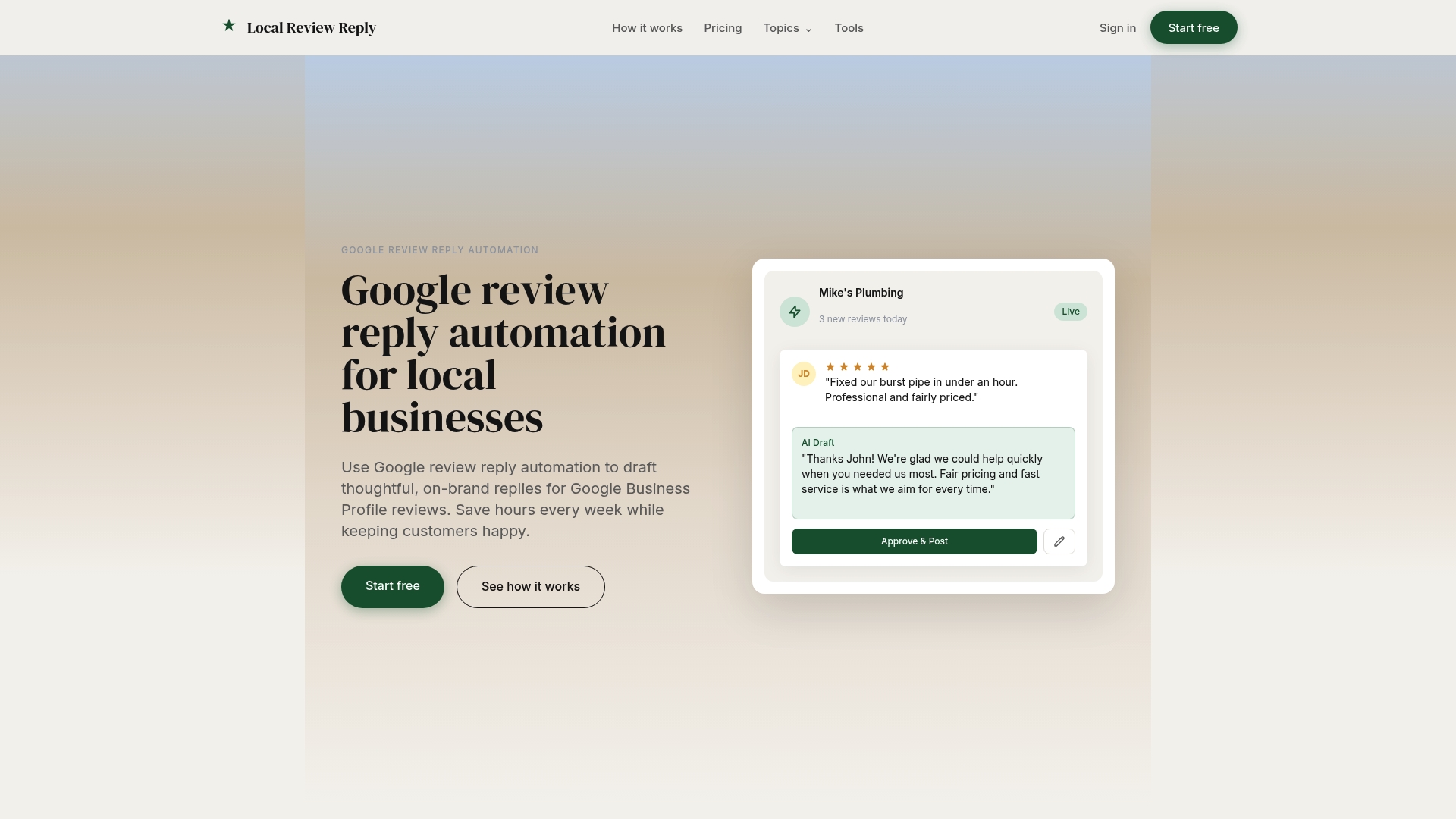
Keeping an emoji policy consistent gets harder the more locations and staff are involved, which is a common challenge for multi-location teams. We draft personalized, on-brand replies for Google Business Profile reviews, and include approval workflows that route sensitive or low-star reviews to a human before anything posts publicly.
For franchises and multi-location operators, that means aiming for a consistent tone and a tested emoji whitelist across every location, to reduce manual checking of drafts. If you manage review requests directly, it's also worth understanding what review solicitation rules allow before scaling outreach alongside your reply process.
Plans scale with location count and reply volume, from a free tier through Starter, Growth, Scale, and Custom options. You can see current plan details on our pricing page and find the tier that fits your team.

FAQ
Should a business ever use emojis in review responses?
Yes, but only for clearly positive or light neutral reviews, and only one emoji per reply placed after the main point is already made in words. Avoid emoji entirely for negative, legal, medical, or safety-related reviews, where clarity matters more than warmth.
What does 🤗 mean in a review reply?
The 🤗 face is officially called "smiling face with open hands," but Emojipedia documents that it's often read as jazz hands or excitement rather than a hug. That ambiguity makes it a risky choice for comforting an upset customer in a sensitive reply.
How should I react to a negative review that contains an offensive emoji?
Check whether the emoji use violates Google's prohibited content policy, and flag it for review if it does. While a decision is pending, reply calmly, acknowledge the comment, and offer to continue the conversation offline rather than escalating in public.
Do emojis actually improve how customers perceive a brand's replies?
Research combining two experiments (N≈401) found that emoji congruent with the message's tone increased perceived warmth and modernity. The effect depends on fit: an emoji that matches the sentiment helps, while one that clashes with it can lower perceived quality.
What's the safest way to scale emoji use across multiple business locations?
Pair a short, tested emoji whitelist with severity-based approval rules, such as requiring human review for anything under three stars. Workflow tools with approval controls can support this kind of routing for franchises and multi-location teams.
Sources
- The use of paralinguistic cues—including emoji—in computer-mediated communication (semanticscholar PDF)
- Let’s face it: When and how facial emojis increase the persuasiveness of electronic word of mouth | Journal of the Academy of Marketing Science
- With or without Emoji: Perceptions about Emoji Use in Different Brand-Consumer Communication Contexts (ResearchGate)
- Smiling Face with Open Hands emoji | Emojipedia
- Prohibited & restricted content - Google Business Profile Help