
Response ownership rules are the policies that decide who drafts, approves, and publishes a reply to a customer review, and how that decision is tracked. The default we recommend: local staff draft replies, a regional or corporate reviewer approves anything sensitive or low-star, and one controlled account per location publishes the final version. The sections below cover the role matrix, approval workflows, Google permissions, compliance, templates, and how to measure whether the system is working.
TL;DR:
- Most replies should be drafted by local staff and approved by regional or corporate reviewers for sensitive or low-rated reviews within a 48-hour SLA.
- Only owners can add or remove users on Google Business Profiles, but managers can reply to reviews without approval unless the review is sensitive.
- A hybrid model of local drafting with centralized approval for sensitive reviews offers the best balance of speed, relevance, and risk mitigation.
- Responses should follow FTC transparency guidance, avoiding pressure tactics and avoiding discussing fake reviews unless confirmed.
- Logging every draft, approval, edit, and publish action ensures accountability and compliance, with regular audits correcting drift.
- ✓Personalised, on-brand reply drafts
- ✓Approval controls for sensitive reviews
- ✓Consistent responses across locations
- ✓Support for high review volumes
Table of Contents
- Role matrix: who drafts, approves, and publishes reviews
- Approval workflows and controls for sensitive reviews
- Centralized, decentralized, and hybrid operating models
- Google Business Profile permissions and technical setup
- Compliance and transparency: FTC guidance and the fake reviews rule
- Templates, tone, personalization, and audit logs
- Measuring whether your ownership rules are working
- What I'd tell a team scaling this fast
- How Local Review Reply supports these rules in practice
- FAQ
- Sources
Role matrix: who drafts, approves, and publishes reviews
Most multi-location organizations need four roles, not one: a local responder who knows the customer and the context, a regional approver who screens for brand and legal risk, a corporate publisher or administrator who manages platform access, and, where applicable, an agency user handling volume across many locations.
A workable allocation keeps things simple: local staff draft every reply, positive reviews (4 to 5 stars) publish automatically or near-automatically, and anything sensitive routes to a named approver before it goes live. Fragmented publishing, where many individual staff accounts post directly, creates an inconsistent public voice and makes audits harder. A single publishing account or a tightly controlled user group per location solves that without slowing down routine replies.
- Local responder: drafts replies using firsthand knowledge of the interaction.
- Regional approver: reviews sensitive or low-rated drafts before they post.
- Corporate publisher or admin: controls platform access and final publishing rights.
- Agency user: drafts or manages replies across multiple client locations under delegated access.
Every approval should be logged with a named approver and a timestamp, not just a status change, so the organization can reconstruct who signed off on any public statement later.
Approval workflows and controls for sensitive reviews
Not every review needs a second set of eyes, but some always should. Define sensitivity triggers in advance rather than deciding case by case: 1 and 2 star ratings, any mention of safety, injury, discrimination, or legal threats, and anything that names an employee directly.
- Local staff draft a reply within a set window, typically 24 to 48 hours.
- The system flags the draft automatically if it matches a sensitivity trigger.
- A regional approver reviews and either publishes, edits, or escalates.
- Legal or corporate review handles anything involving threatened litigation, safety claims, or named-employee accusations.
- The approved reply posts from the single controlled account, with the full history retained.
Keep a version history for every reply: draft, edits, approver identity, and publish timestamp, stored in a way nobody can quietly alter after the fact. That record is what protects the organization if a reply is later disputed.
Pro Tip: Set a hard SLA, such as 48 hours, for sensitive-review approval so drafts don't sit untouched while the public review ages.
Centralized, decentralized, and hybrid operating models
Franchises, corporate-owned chains, and agencies tend to gravitate toward different models, and each comes with real trade-offs.
- Centralized: corporate or an agency drafts and publishes everything; strongest brand consistency, weakest local color, and the slowest turnaround at scale.
- Decentralized: each location drafts and publishes independently; fastest and most locally relevant, but highest brand-risk exposure and the heaviest training burden.
- Hybrid: local staff draft, a central team approves sensitive cases and publishes through a shared account; this is what we recommend as the default for most multi-location operators.
To choose, ask three questions: how much local nuance matters to your customers, how much legal or reputational exposure a bad reply could create, and how much training time you can realistically give frontline staff. If the answer to the second question is "a lot," lean hybrid or centralized rather than fully decentralized.
Google Business Profile permissions and technical setup
Policy only works if it matches what Google's platform actually allows. On a Google Business Profile, only owners can add or remove other users, while both owners and managers can reply to reviews, so your internal "who can publish" rule has to map onto these two account types. Business Groups let organizations assign sets of locations to specific user groups, which is the practical way to mirror an approval hierarchy across dozens or hundreds of locations.
A few technical notes matter before rules go live:
- Verification is required before a profile can reply to reviews at all.
- Google reviews replies before they post publicly, and the original reviewer is notified once a reply appears.
- Teams drafting or publishing at volume can use the Business Profile API to list, reply to, and manage replies programmatically, provided OAuth credentials and admin access are configured correctly.
Compliance and transparency: FTC guidance and the fake reviews rule
Reply policy is not only an operations question. The FTC's guidance on endorsements and reviews advises businesses to stay transparent about review practices, avoid suppressing negative feedback, and maintain reasonable procedures for identifying fake or suspicious reviews. A reply that pressures a reviewer to delete a negative post or implies special treatment in exchange for a changed rating runs against that guidance.

In 2024, the FTC also finalized a rule banning fake reviews, prohibiting businesses from creating, buying, or disseminating fake or false consumer reviews, and restricting certain insider or company-controlled testimonial practices. The rule specifically targets fabricated or purchased reviews and undisclosed insider testimonials, not the act of replying to a genuine review, but the same transparency principle should guide what your approvers allow in a public reply.
A short checklist for anyone approving replies:
- Never ask a reviewer to remove or edit a negative review in exchange for anything.
- Never write a reply that implies a review was fake when it was not verified as such.
- Treat positive and negative reviews with the same reply standards and response time.
Templates, tone, personalization, and audit logs
Templates save time, but used carelessly they read as dismissive, especially on low-rated reviews. Research on managerial responses to reviews found that personalization increases perceived usefulness most for low-rated reviews, while generic replies can actually reduce how useful readers find them; the same research found readability improves usefulness across the board. In practice: use a short template as a starting structure for positive reviews, but require a personalized rewrite referencing specifics for anything at 1 or 2 stars.
- Match the reviewer's tone for casual, positive feedback; stay measured and professional for complaints or disputes.
- Flag drafts automatically by keyword (refund, injury, rude, discrimination) and by star rating for mandatory review.
- Log draft author, approver name, and both timestamps on every reply, not just the published ones.
Practical guidance on personalizing difficult replies, including usable response templates, can help standardize this step without making every low-rated reply sound identical.
Pro Tip: Keep templates to two or three sentences. Short, specific replies read as more sincere than long ones, even when they're following a structure.
Measuring whether your ownership rules are working
A policy that nobody checks tends to drift. Track a small set of KPIs rather than everything available:
- Average reply time, from review posted to reply published.
- Percentage of replies that followed the approval workflow versus those posted outside it.
- Percentage of sensitive replies approved within the agreed SLA.
- Audit-fail rate, meaning replies missing a logged approver or timestamp.
- Shifts in review sentiment or rating trends following a change in reply practice.
Run a lightweight cadence: check SLA adherence weekly, spot-check a sample of replies monthly, and do a full compliance review quarterly. Feed what you find directly back into training and into the written policy itself, since most drift comes from unclear rules rather than careless staff.
What I'd tell a team scaling this fast
The failure mode we see most is not bad replies, it's slow ones created by too much centralized review. Speed and control aren't opposites if your sensitivity triggers are narrow and specific. Start this week with one change: a 48-hour mandatory approval window for any 1 or 2 star reply or any claim of harm.
— Ryan
How Local Review Reply supports these rules in practice
We built Local Review Reply around the same structure outlined above: local teams get fast, on-brand draft suggestions, while sensitive and low-star reviews route through an approval step before anything posts publicly. Role and location controls keep publishing consistent across franchises or multi-location accounts, and every draft, approval, and publish action is logged for later review.
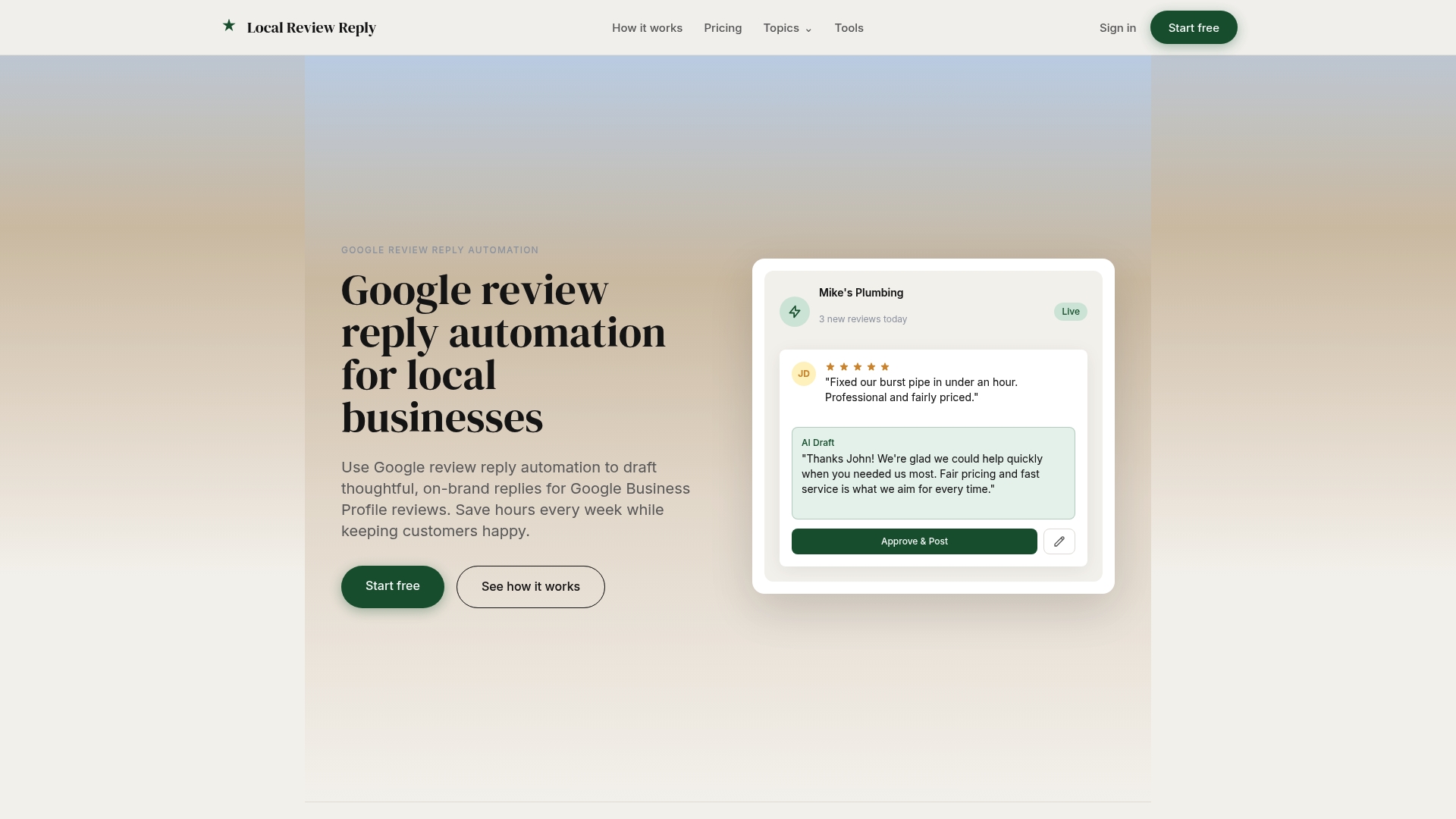
- Automated draft suggestions that match your brand voice, reviewed by a human before anything goes live.
- Approval workflows specifically for sensitive and low-rated reviews, with named approvers.
- Role and location permissions built for franchises, multi-location brands, and agencies managing several clients.
- An audit trail covering every draft, edit, approval, and publish event.
If you're setting up response ownership rules for the first time or replacing a patchwork of individual logins, our pricing page lays out the Free, Starter, Growth, and other plan options so you can start with the tier that matches your location count.
FAQ
Who should own the Google Business Profile account for multiple locations?
Ownership should sit with a corporate or agency administrator who controls user access, since only an owner can add or remove other users on a Google Business Profile. Day-to-day drafting and publishing can still be delegated to managers or user groups without changing who holds account ownership.
Can a local manager reply to reviews without corporate approval?
Yes, both owners and managers can reply to reviews on a verified profile, so a local manager can technically publish without a centralized step. Most multi-location operators still restrict this for sensitive or low-rated reviews by requiring a regional or corporate sign-off before anything posts.
What does the FTC rule on fake reviews mean for how we reply?
The FTC's final rule bans creating, buying, or spreading fake reviews and restricts undisclosed insider testimonials, not the act of replying to genuine reviews. Approvers should still avoid any reply that pressures a reviewer to change or delete feedback, which conflicts with the FTC's broader transparency guidance.
Should every reply be personalized, or are templates acceptable?
Templates work fine as a starting point for positive, routine reviews, but research on managerial responses found personalization matters most for low-rated reviews, where generic replies read as less useful. A hybrid approach, template structure with specific personalization for 1 and 2 star reviews, balances speed and sincerity.
What should we do if we suspect a review is fake?
Document the suspicious signals and follow a structured escalation path rather than replying as if the review were genuine; a practical escalation process for suspected fake reviews can guide that investigation. Public replies should stay factual and avoid accusing a specific person of fabricating a review before that's confirmed.