
Effective review response training teaches your team to classify each complaint, match tone to complaint type, use short adaptable templates, and escalate sensitive cases to a manager before posting. The immediate next step is to pick one template set below, set a 24 to 48 hour reply window, and define who approves low-star or legally sensitive responses before you train anyone on wording.
TL;DR:
- Procedural complaints need a brief explanation and concrete fix, interactional complaints need an apology, and mixed cases require both in the reply.
- Set a 24 to 48 hour first reply window for routine reviews, and target same day responses to one and two star reviews when possible.
- Route mentions of safety, discrimination, legal threats, refund demands, or press attention to a manager, who must approve the public reply before posting.
- Use templates as adaptable skeletons, add a name or detail, and keep order numbers and sensitive medical or financial information out of public replies.
- Run three 10 to 15 minute roleplays covering praise, routine problems, and high risk complaints; review five or six recent replies monthly to calibrate tone.
Table of Contents
- Why reply training matters for trust, conversion, and compliance
- A simple framework: match rational and emotional cues to complaint type
- Plug-and-play templates for positive, neutral, and negative reviews
- How to operationalize training with SLAs and approval controls
- Roleplays, calibration drills, and KPIs that build the skill
- When and how to scale with automation and AI drafting
- What I'd expect from a real rollout
- A faster way to draft replies without losing oversight
- FAQ
- Sources
Why reply training matters for trust, conversion, and compliance
Public replies are read by far more people than the reviewer alone. Google's guidance on writing better review replies recommends staying conversational rather than promotional, since the response is meant to reinforce the customer's experience, not pitch a deal. That single rule eliminates most of the generic, salesy language that makes replies feel canned.
Regulatory exposure is real too. The FTC's final rule on consumer reviews and testimonials prohibits deceptive practices including fake reviews, unlawful suppression of honest negative feedback, and coercive tactics aimed at reviewers. Training should cover what is allowed when you reach out to a reviewer, not just how to word a reply.
A few operational habits reduce risk and improve outcomes:
- Reply within a set window so a reply window becomes a habit, not an afterthought
- Never offer discounts or incentives in exchange for a changed review
- Keep private details out of public replies and move specifics to direct message or phone
- Route anything resembling a legal threat or safety claim to a manager before posting
A simple framework: match rational and emotional cues to complaint type
Research on service recovery gives managers a workable shortcut: complaints tend to fall into three buckets, and each one calls for a different kind of language.
- Procedural complaints center on process failures like slow service, wrong orders, or billing errors. These call for rational cues: a brief explanation of what happened and the concrete fix.
- Interactional complaints center on how the customer was treated, such as feeling dismissed or spoken to rudely. These call for emotional cues: a genuine apology and acknowledgment of how the experience felt.
- Mixed complaints combine both, for example a billing error paired with a rude staff interaction. These need a short rational explanation plus a sincere emotional acknowledgment.
Research on service failure type and response strategy finds that matching rational explanations to procedural failures and emotional empathy to interactional failures produces better outcomes than applying the same tone to every review. Mismatching cues, such as responding to a hurt customer with a purely procedural explanation, tends to make things worse.
You can usually tell which bucket a review falls into from its language. Words like "slow," "wrong," "refund," or "policy" point to a procedural issue. Words like "ignored," "rude," "felt," or "disrespected" point to an interactional one. When both appear, treat it as mixed.
Separate research on manager responses to online reviews finds that calibrated replies improve the tone of future reviews and reduce repeat complaints over time, according to research on how manager responses affect subsequent reviews. That makes the classify-then-match step worth teaching before you touch wording at all.
Plug-and-play templates for positive, neutral, and negative reviews
Templates work best as short skeletons your team fills in with one or two personal details, not scripts read verbatim.
Positive reviews:
- Thank you: "Thank you, [name], for the kind words about [specific detail]. We're glad [staff member/team] could make your visit a good one."
- Feature highlight: "We're happy you enjoyed [specific service/product]. That's one of the things our team works hardest to get right."
- Invite advocacy: "Thanks for sharing this, [name]. We'd love to see you again soon."
Negative reviews:
- Quick apology and fix: "We're sorry this happened, [name]. We've [specific action taken] and would like to make it right. Please reach us at [contact] so we can follow up directly."
- Procedural explanation: "Thanks for flagging this. [Brief explanation of what happened] isn't typical for us, and we've [specific fix]. We'd appreciate the chance to discuss further at [contact]."
- Escalation to offline resolution: "We take this seriously, [name]. We'd like to understand what happened in more detail. Could you reach out to [manager contact] directly so we can resolve this properly?"
Neutral or question reviews: "Thanks for asking, [name]. [Brief, accurate answer]. Feel free to reach us at [contact] if you have more questions."
Keep personalization to a name, date, or specific service, redact anything that identifies a transaction publicly (order numbers, account details, medical or financial specifics), and sign with a first name or team name rather than a generic "Management."
Pro Tip: Draft three versions of your negative-review template at different apology lengths and let staff pick the one that fits the complaint's severity rather than writing from scratch each time.
How to operationalize training with SLAs and approval controls
Templates only work if your workflow supports them. Build these into the rollout, not as an afterthought:
- Set a first-reply SLA within a couple of days for all reviews and aim for faster replies on the lowest ratings where possible, leveraging Google Ads for Professional Services to optimize outreach.
- Define escalation triggers in advance: any mention of safety, discrimination, legal threats, refund demands, or exposure to a large audience (press, influencer) routes straight to a manager.
- Require manager approval on any reply to a review flagged by an escalation trigger before it posts publicly.
- Keep a simple record of the public reply, any offline resolution offered, and who approved it, for both quality control and compliance purposes.
- When using drafting automation, treat the draft as a starting point: a human still reviews and signs off before anything sensitive goes live.
Practitioner guidance on escalation and human-in-the-loop oversight emphasizes that approval workflows should stay simple enough not to create a bottleneck, since slow sign-off defeats the purpose of a fast SLA.
Roleplays, calibration drills, and KPIs that build the skill
Short, repeated practice beats long training sessions. Three 10 to 15 minute roleplay scenarios cover most of what a team needs:
- A glowing five-star review: practice a warm, specific thank-you without sounding scripted.
- A routine procedural complaint (late order, billing mix-up): practice rational explanation plus concrete fix.
- A high-risk complaint (rude staff, safety concern, legal language): practice recognizing the escalation trigger and drafting a holding reply for manager review.
Track a handful of metrics monthly: response rate, SLA adherence, whether review tone improves after a reply, and how often reviews get escalated. A short monthly calibration session, reviewing five or six recent replies as a group, keeps tone consistent across staff and surfaces template gaps before they become a pattern.
When and how to scale with automation and AI drafting
Drafting tools speed up routine replies and keep tone consistent across locations, but they can miss context a human would catch in an unusual complaint. Any rollout needs mandatory safeguards: manager approval for sensitive or low-star replies, audit logs of who approved what, role-based permissions, and an easy edit step before publishing. When evaluating a vendor, check for approval workflows, edit history, and clear controls over what posts automatically versus what waits for a person.

What I'd expect from a real rollout
Training sticks faster when you start with your highest-impact reviews, the one and two star ones, rather than trying to perfect every template at once. Calibration sessions and a consistent tone across your team matter more than any single perfectly worded reply. Keep every public response centered on the customer in front of you, not on defending the business, and the rest tends to follow.
— Ryan
A faster way to draft replies without losing oversight
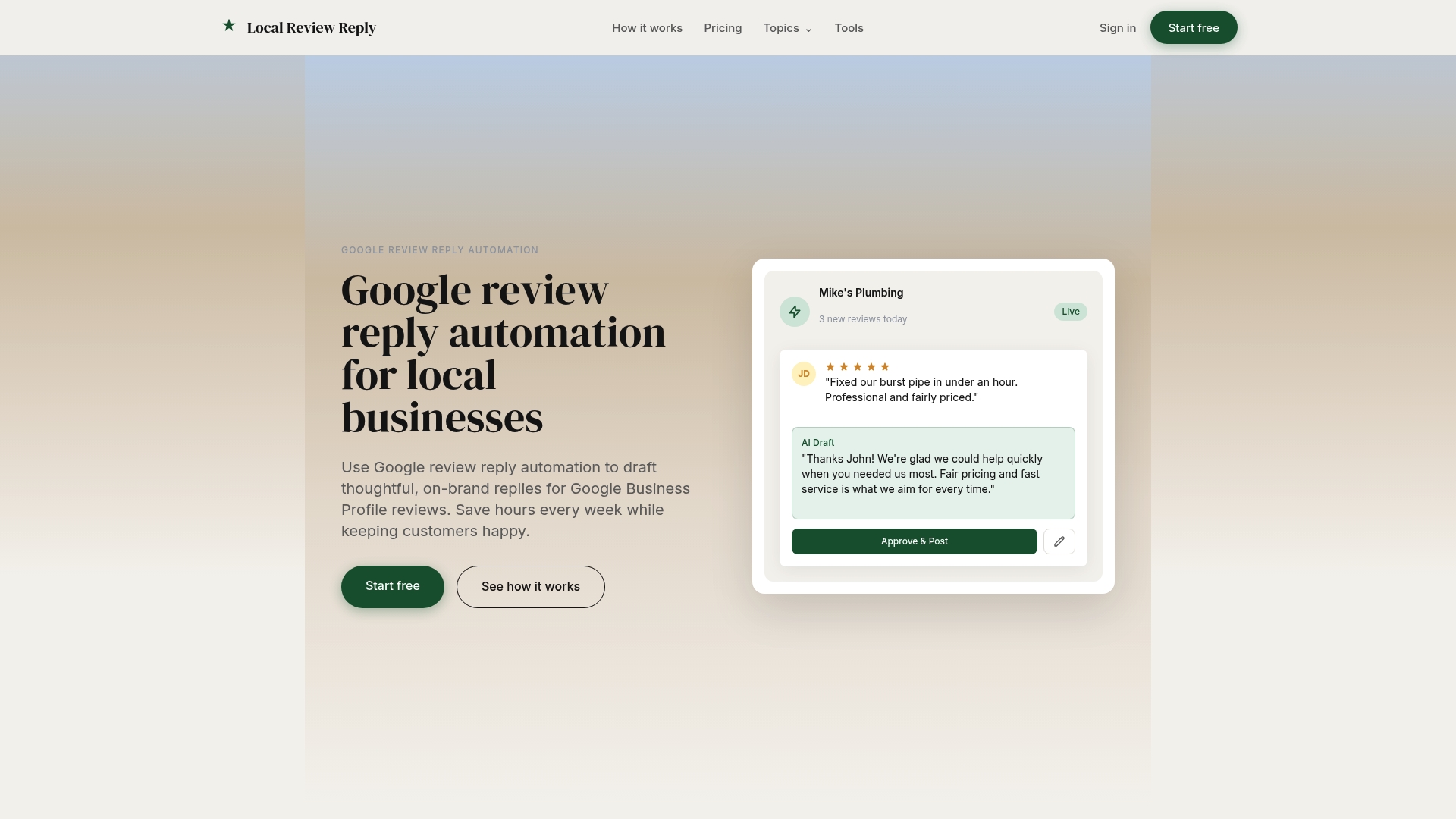
We built Local Review Reply to draft on-brand replies in seconds while keeping manager approval required for sensitive, low-star cases. Pilot it on a few locations, audit the drafts, and decide if it fits your workflow before rolling it out more broadly.
FAQ
How do you write a positive review response?
Thank the reviewer by name, reference one specific detail from their review, and keep the tone warm and brief. Google's guidance recommends staying conversational rather than promotional, so skip any mention of deals or discounts.
What is the best way to review a training session?
Compare a handful of recent replies against your framework: did the response match rational or emotional cues to the complaint type, and did it follow the SLA? A short monthly calibration session where the team reviews five or six replies together works better than a one-time audit.
What's the difference between a review and feedback?
A review is a public post a customer leaves on a platform like Google, while feedback is any input about performance, which can be public or private, solicited or not. Review response training focuses specifically on how to reply publicly to the former while staying compliant with platform and legal rules.
How do you write feedback for a training program on review responses?
Note whether the trainee correctly classified the complaint type, matched tone appropriately, and recognized any escalation triggers before posting. Point to a specific example from a roleplay or real reply rather than giving general praise or criticism.
How quickly should a business reply to a review?
A 24 to 48 hour window works for most reviews, with a same-day target for one and two star reviews when possible. Faster replies on negative reviews reduce the risk of unresolved complaints escalating further in public.