
For local businesses and agencies whose real problem is reply speed and brand consistency, Localreviewreply is the strongest Yext alternative. It drafts personalized, on-brand Google Business Profile replies in seconds and routes sensitive low-star reviews through configurable approval queues before anything goes public.
- Best fit: Local service businesses, franchise operators, and marketing agencies that need fast, consistent Google review replies at scale, verified through third-party platforms like G2 and Software Advice.
- The trade-off: Localreviewreply is purpose-built for Google review replies, not broad directory syndication across 175+ publishers. If your primary need is enterprise listings governance, Yext's network breadth is genuinely hard to match.
Table of Contents
- Which Yext alternative fits your review-reply workflow?
- How to choose the right platform for your team
- How to migrate from Yext to a review-reply platform
- What AI review-reply automation actually looks like in practice
- How pricing models differ and how to estimate ROI
- Localreviewreply handles Google review replies at scale
- Key Takeaways
- The mistake most buyers make when leaving Yext
- Useful sources for your evaluation
Which Yext alternative fits your review-reply workflow?
Review-focused tools consistently outperform listing-first platforms on automated reply workflows and Google Business Profile interaction. The table below maps each platform to the dimension that actually drives the buying decision.
| Platform | Best for | AI drafting & templating | Approval workflows & low-star handling | Multi-location support | GBP / CRM / helpdesk integrations | Analytics & reporting | Agency / white-label | Pricing model & trial | Setup & migration |
|---|---|---|---|---|---|---|---|---|---|
| Localreviewreply | Local businesses, franchises, and agencies needing fast, on-brand GBP replies at scale | AI drafts personalized replies; tone profiles per location | Configurable approval queues; low-star escalation controls | Multi-location governance; role-based permissions | Direct GBP API; CRM and helpdesk integrations | Dashboard analytics; reply-log exports | White-label options; multi-client dashboards | Tiered subscription by location/volume; free trial | Guided setup; migration support included |
| Yext | Large organizations needing location data governance and broad directory syndication | Limited native AI reply drafting | Basic review monitoring; limited approval workflow depth | Enterprise-grade; strong location data management | Broad publisher network; GBP included | Knowledge management analytics; location data reporting | Enterprise account structures | Premium enterprise pricing; demo-based | Structured onboarding for enterprise |
| Birdeye | Businesses prioritizing review collection and customer feedback workflows | AI-assisted reply drafting; templating available | Feedback workflows; some approval controls | Multi-location support; franchise-ready | GBP, CRM, and messaging integrations | Strong feedback analytics; sentiment reporting | Agency tiers available | Tiered plans; free trial/demo | Moderate setup; onboarding support |
| Reputation.com | Enterprises needing structured reputation analytics across many locations | AI reply assistance; templating | Governance workflows; enterprise escalation | Deep multi-location and enterprise support | GBP, CRM, and helpdesk integrations | Analytics-heavy; enterprise reporting dashboards | Enterprise agency features | Enterprise pricing; demo required | Structured enterprise onboarding |
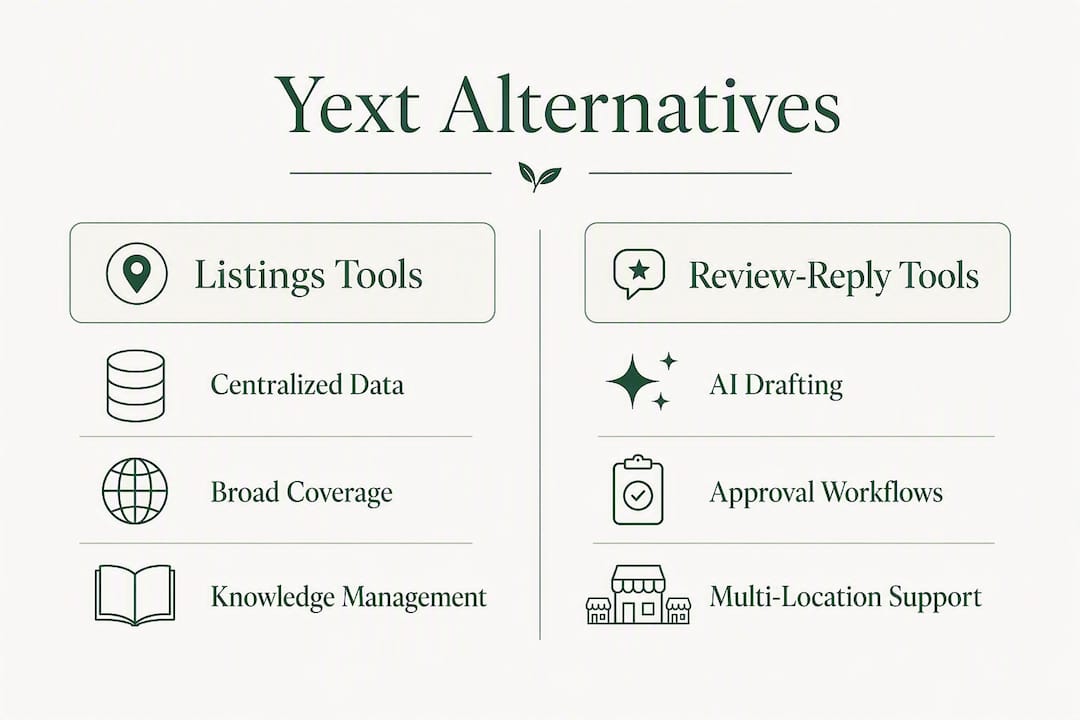
G2 comparative data confirms Yext scores highest on knowledge management and data centralization, while review-centric platforms score higher on customer feedback and analytics. Software Advice reinforces this: Birdeye and reputation-focused platforms emphasize review collection and feedback workflows where Yext leads on listings breadth.
Pro Tip: Before any vendor demo, seed one internal test location with a 2-star review and walk the vendor through their full approval workflow. How long does it take from review alert to draft to publish? That single test reveals more about real-world usability than any feature checklist.
Trust signals to verify during vendor conversations:
- Third-party user reviews on G2 and Software Advice (ease of setup, support responsiveness, analytics quality)
- Direct Google Business Profile API documentation, not just "GBP compatible" marketing copy
- SLA response times and support hours in writing
- Audit logs and reply-history exports for compliance
How to choose the right platform for your team
The right choice depends on whether your priority is enterprise listings, review management, or cost. Start there, not with feature lists.
Evaluation criteria, in priority order:
- AI drafting quality and tone control per location
- Approval workflow depth, especially for low-star reviews
- Direct Google Business Profile API integration (not a workaround)
- Multi-location governance and role-based permissions
- Agency and white-label support
- Reporting, reply-log exports, and audit trails
- Security, compliance, and data handling documentation
- Setup, migration assistance, and onboarding timeline
Questions to ask on every demo:
- Show me the full approval workflow for a review rated under 3 stars, from alert to publish.
- How do you enforce brand tone across 20 or 200 locations?
- Can I export a complete reply log, and in what format?
- What happens to my existing review history if I migrate from another platform?
- What are your SLA response times for urgent escalations?
Red flags that should stop a purchase:
- No direct GBP API (a third-party workaround introduces latency and failure points)
- Vague or absent approval workflow documentation
- No audit logs or reply-history exports
- No bulk migration support or data mapping assistance
- Third-party comparison pages flag pay-per-reply pricing surprises buried in contracts
How to migrate from Yext to a review-reply platform
Switching is feasible for most organizations in four to eight weeks. The primary risks are data mapping gaps, approval policy misalignment, and staff training lag, not technical complexity.
- Pre-migration audit. Export your current review history, reply logs, and location data from Yext. Document your existing approval policies and escalation rules.
- Data export and mapping. Map location records to the new platform's structure. Confirm GBP location IDs transfer cleanly.
- Approval workflow setup. Recreate your low-star escalation rules, tone profiles, and role-based permissions in the new system before any live traffic.
- Pilot group and QA. Select two to five locations for a one-to-two-week pilot. Include ops, marketing, and legal in the review group.
- Phased rollout. Roll out in batches: small operators can complete full migration in two to three weeks; mid-sized teams typically need four to six weeks; multi-location franchises should plan six to eight weeks minimum.
- Monitoring and rollback plan. Define clear rollback criteria before go-live. Monitor approval latency, tone-match rates, and response time daily for the first two weeks.
Staged rollouts are consistently recommended when switching core local tools, specifically to validate approval workflows before full deployment.
Pro Tip: Set up one internal staging location that never appears in GBP search results. Use it to stress-test your low-star handling with a cross-functional pilot team before any customer-facing location goes live. It catches policy gaps that no vendor demo will surface.
What AI review-reply automation actually looks like in practice
The features that matter most are AI drafting, tone profiles, templating, approval queues, audit logs, and low-star escalation. Everything else is secondary.

A typical flow: a new Google review triggers an automatic AI draft, personalized to the review content and the location's tone profile. That draft enters a human review queue. A team member approves, edits, or escalates. For reviews below a set star threshold, the draft routes to a manager or legal reviewer before publish. The approval workflow is the control layer that keeps AI speed from creating brand or compliance risk.
Integration touchpoints that matter in practice:
- Google Business Profile API: direct connection for real-time review alerts and reply publishing
- CRM context: pulling customer history into the draft for more relevant, personalized replies
- Helpdesk integration: escalating unresolved issues from a review into a support ticket automatically
- Analytics exports: feeding reply-log data into reporting dashboards or BI tools
Many review-management platforms position automated review collection, sentiment filtering, and reply automation as their core differentiators from full-scale listing platforms. The practical difference shows up in response latency: a listing-first platform may surface the review, but a reply-first platform closes the loop.
Pro Tip: Build a canned-phrase library for your most common review scenarios (service delay, staff compliment, pricing concern) and assign it to specific tone profiles. Combined with role-based permissions, this cuts moderation time significantly while keeping every reply on-brand.
How pricing models differ and how to estimate ROI
Pricing varies widely across these platforms. The model that fits depends on your reply volume, location count, and governance requirements.
Cost drivers to map before any vendor call:
- Number of active locations
- Monthly reply volume (some platforms charge per reply, others by location tier)
- Approval workflow depth and team seat count
- Required integrations (CRM, helpdesk, white-label)
- Migration, onboarding, and support fees
A simple ROI estimate: Calculate your current monthly hours spent manually drafting and approving replies. Multiply by your team's hourly cost. That is your baseline. Businesses frequently reallocate budget from broad directory syndication toward tools that prioritize Google Business Profile response time when the primary problem is reply speed, not listings coverage. If a specialized platform cuts manual reply time by half, the breakeven calculation is usually straightforward.
Negotiation targets for vendor calls:
- Pilot period with measurable success metrics before full contract
- Onboarding credits or waived setup fees
- SLA response times for support and escalations in writing
- Data portability and export rights at contract end
Localreviewreply handles Google review replies at scale
Localreviewreply is built for exactly the problem most local businesses and agencies actually have: too many Google reviews, not enough time to reply consistently, and real risk when a low-star response goes out without approval.
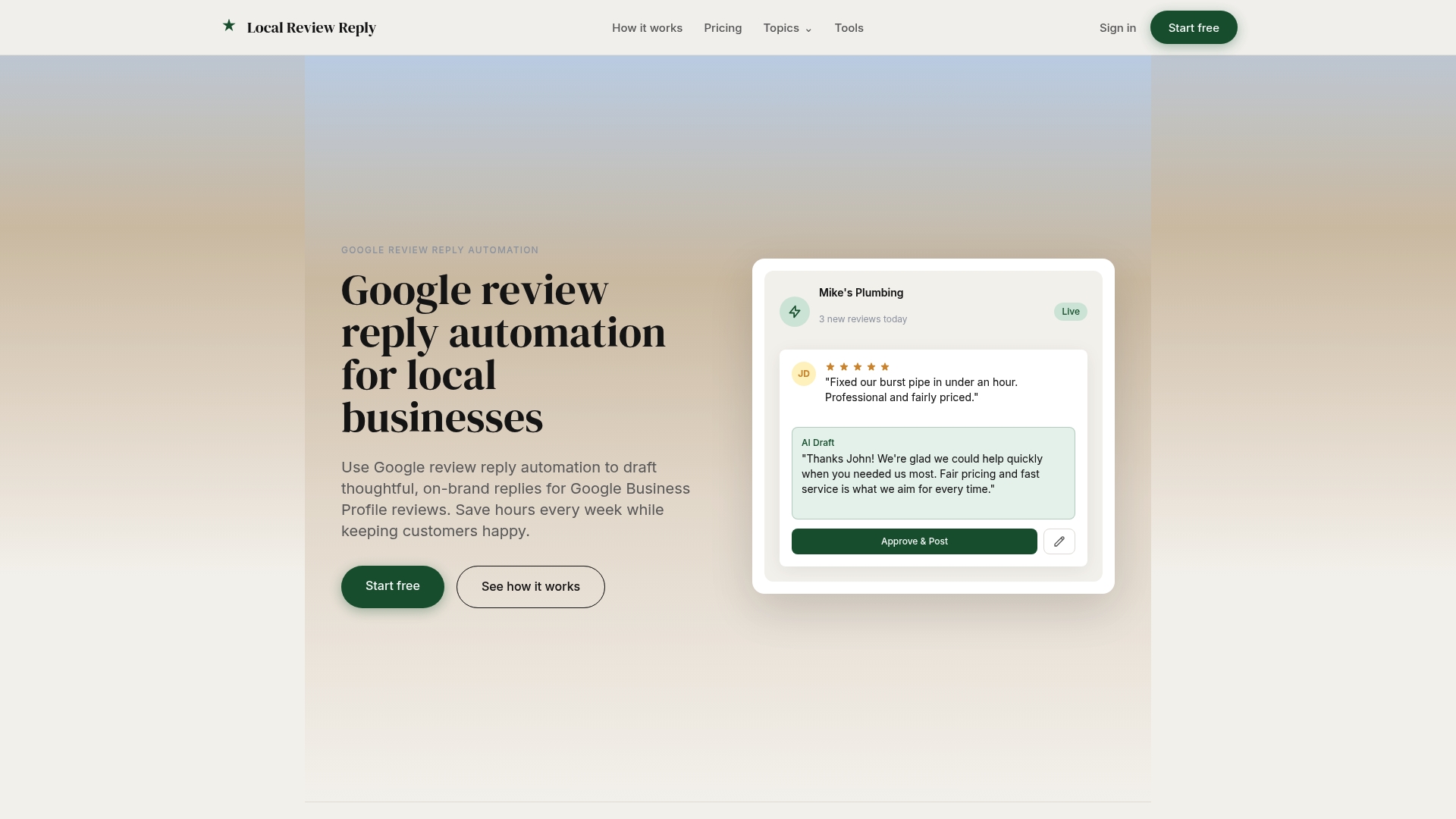
The platform covers AI drafting with tone control, configurable approval queues for sensitive reviews, multi-location governance, and white-label options for agencies managing multiple clients. Setup is guided, migration support is included, and the free trial lets you test the full approval workflow on a pilot location before committing.
Start with the free trial on Google review management software and run your approval workflow on one pilot location first. That single test will tell you everything the demo cannot.
Key Takeaways
For most local businesses and agencies, the right Yext alternative is a specialized review-reply platform, not a broader listings suite.
| Point | Details |
|---|---|
| Shortlist by job-to-be-done | Decide first: listings governance or Google review-reply speed. They are different buyer jobs. |
| Run a two-week pilot | Test approval workflow latency and tone accuracy on two to five locations before full rollout. |
| Check GBP API directly | Demand direct Google Business Profile API documentation, not just marketing claims, from every vendor. |
| Use G2 and Software Advice | Read third-party user reviews for setup ease, support quality, and analytics before signing. |
| Localreviewreply for reply-first teams | For local businesses, franchises, and agencies prioritizing fast, on-brand GBP replies, Localreviewreply is the purpose-built option. |
The mistake most buyers make when leaving Yext
The most common error is buying listings breadth when the actual problem is reply speed and tone. Buyers evaluate Yext alternatives on publisher network size, then sign a contract for a platform that syndicates to dozens of directories but still requires a human to manually draft every Google reply.
Google Business Profile is where most local reputation decisions happen. A customer who leaves a 2-star review and gets no reply within 48 hours draws a different conclusion than one who gets a thoughtful, on-brand response the same day. That gap is not a listings problem. It is a workflow problem, and no amount of directory syndication closes it.
The practical fix is governance before scale: set your tone profiles, approval thresholds, and escalation rules on a single pilot location. Get ops, marketing, and legal aligned on what a low-star reply should look like before you roll out to 50 locations. The teams that skip this step are the ones who end up with a fast platform producing off-brand replies at volume.
Useful sources for your evaluation
- Gartner Peer Insights: Yext alternatives and competitors — use for enterprise buyer perspectives and verified user reviews across deployment and support categories.
- G2: Birdeye vs. Yext comparison — use for side-by-side user sentiment on features, setup ease, and analytics quality.
- Software Advice: Birdeye vs. Yext — use to verify feature focus differences and check for direct GBP integration and audit log documentation.