
When you spot an abusive review, flag it through the platform's reporting tool immediately, then screenshot the full page with the URL and timestamp visible before it can be edited or deleted. Post a short, neutral public reply that addresses any real complaint buried in the noise and invites the person to continue privately. If the review includes a payment demand, a threat, or someone's personal information, skip straight to filing a merchant extortion report and consider contacting law enforcement.
TL;DR:
- Reviews that include threats, doxxing, or extortion demands require preserving all evidence and reporting directly to law enforcement, not just platform moderation.
- Evidence collection should include full screenshots, review permalinks, reviewer profiles, timestamps, and any off-platform messages to build a strong case.
- Public responses must acknowledge genuine issues without threats or accusations, avoiding offers to remove reviews in exchange for compensation.
- Escalate only when reviews involve clear threats, personal information publication, or coordinated attack patterns, and attach comprehensive evidence when submitting reports.
- Implement a review response workflow with draft, review, and approval stages to handle sensitive responses efficiently across multiple locations.
Table of Contents
- What Counts as Abusive vs. What Won't Get Removed
- Document and Report: Your Evidence Checklist
- Safe Public Replies: Templates That Protect Your Reputation
- When and How to Escalate: Extortion, Threats, and Coordinated Attacks
- Prevention and Workflows: Building a Repeatable Playbook
- When Replying Helps and When Silence Is Better
- How an Approval-First Reply Workflow Fits Into This Playbook
- Where to Verify the Rules Yourself
- Sources
- FAQ
What Counts as Abusive vs. What Won't Get Removed
Platforms draw a narrow line, and most business owners assume it's wider than it actually is. A review calling your food "overpriced and slow" is a customer opinion, no matter how much it stings. A review calling you or your staff a slur, threatening violence, publishing someone's home address, or demanding money to make a bad review disappear crosses into abuse.
Google's own policy lists specific categories that qualify for removal: profanity, obscenity, harassment, hate speech, and sexually explicit content. Content that merely criticizes service, price, or wait times almost never qualifies, even when the wording is harsh.
- Profanity and slurs directed at staff or owners
- Explicit threats of violence or harm
- Doxxing: phone numbers, addresses, or other private details posted publicly
- Sexual harassment or unwanted advances toward employees
- Coordinated fake-review attacks from accounts with no purchase history
- Extortion demands tied to a promise to remove or alter a review
If a review contains a threat or doxxing, preserve every piece of evidence before you do anything else and treat it as a matter for law enforcement, not just a platform report.
Document and Report: Your Evidence Checklist
Before you flag anything, build a case file. Platforms move slower when the evidence is thin, and a scattered set of half-cropped screenshots rarely convinces a trust and safety reviewer that something serious happened.
- Take full-screen screenshots showing the reviewer's name, the review text, the date, and your business name all in one frame.
- Copy the review's permalink and save it alongside the screenshot, not just in your browser history.
- Save a link to the reviewer's profile in case the account gets deleted later.
- Log the exact timestamp of when you first saw the review.
- If the abuse continued off-platform (a WhatsApp message, a Telegram handle, a text), screenshot those too, with the sender's handle visible.
To flag content on Google Business Profile, open the review, click the three dots, select "Flag as inappropriate," and follow the prompts. Google will assign no visible case number by default, so ask for one in any follow-up correspondence and write it down.
Pro Tip: Create one folder per incident, named with the date and reviewer handle. When you eventually escalate to a Product Expert or file a merchant extortion report, having every screenshot, permalink, and message thread in one place makes the difference between a case that gets reviewed and one that sits in a queue.
For extortion specifically, Google's merchant extortion report asks for consolidated evidence, not a single screenshot. Attach the review link, the message thread proving a demand for payment, and the timestamps tying them together.
Safe Public Replies: Templates That Protect Your Reputation
Your reply isn't really for the person who wrote the abusive review. It's for the hundred people who read it afterward. A composed, professional response does more for your reputation than any amount of arguing, and Google itself frames this as a signal worth taking seriously even while a report is pending.
Open with a sentence that acknowledges whatever real issue might be buried in the review, then move the conversation off the public page. Never threaten the reviewer, never accuse them of lying without proof, and never offer to adjust a review in exchange for a refund, discount, or gift card. The FTC's Consumer Reviews and Testimonials Rule prohibits businesses from using intimidation or false accusations in review responses, and trading compensation for a review edit runs afoul of the same guidance.
Avoid these in every public reply:
- Threats, even implied ones ("we'll be taking legal action")
- Public accusations that the reviewer is lying, faking their visit, or has no account
- Any offer to change compensation in exchange for editing or removing the review
- Sarcasm, name-calling, or matching the reviewer's tone
Genuine complaint: "We're sorry your visit didn't go the way it should have. We'd like to make this right. Can you email us at [contact] with your order details?"
Unverifiable or suspected fake review: "We don't have a record matching this visit in our system. If you'd like to share more details by email, we're happy to look into it."
Abusive language, legitimate underlying concern: "We take feedback seriously and want to address what happened. We're unable to respond to the language used here, but please reach out directly at [contact] so we can resolve this."
Pro Tip: Keep a bank of three to four approved variations for each scenario. Rotating the wording slightly avoids the robotic, copy-paste feel that makes customers trust a reply less, even when the substance is identical.
When and How to Escalate: Extortion, Threats, and Coordinated Attacks
Not every nasty review needs escalation. These four signals do: an explicit demand for payment tied to review removal, a sudden spike of near-identical negative reviews within a short window, personal information published without consent, or a threat that reads as credible rather than venting.
- Preserve every piece of evidence before you engage further with the reviewer.
- Submit the merchant extortion report with your consolidated folder attached.
- Save every case number or reference ID the platform gives you, even if it seems informal.
- For credible threats or doxxing, file a report with local law enforcement in addition to the platform report.
- Follow up through Google's Product Experts community if the case stalls, since some forum threads document extortion reports going unresolved without consolidated evidence and a case ID to reference.
Expect delays. Platform trust and safety teams process a high volume of reports, and cases without clear evidence trails tend to sit longer. Paying an extortionist is never the answer. It doesn't guarantee removal, and it marks you as a target for repeat demands. If you're dealing with a coordinated spike rather than a single bad actor, a structured review-bombing response gives you a faster path to documenting the pattern for platform review.
Prevention and Workflows: Building a Repeatable Playbook
The businesses that handle abusive review responses well aren't the ones with the cleverest replies. They're the ones with a process nobody has to think about twice.
Check your Google Business Profile daily if you're a single location, or set up review aggregator alerts if you manage several. A review sitting unaddressed for a week does more reputational damage than one answered within a day, and the BBB recommends responding promptly as a baseline practice regardless of business size.
Build a three-stage approval track for anything sensitive:
- A first draft, written by whoever monitors reviews day to day
- A sensitivity check for anything involving profanity, threats, or extortion, routed to a manager or owner
- Final publish, only after the sensitive-tier review clears
Keep a template bank for common scenarios, but personalize each reply enough that it doesn't read like a form letter. Franchises and multi-location operators benefit from a profanity filter workflow that automatically routes flagged language to a human before anything goes live. Loop in legal or PR only when a review involves a real threat, a lawsuit mention, or a public figure, and document how each serious case was resolved in case a similar pattern shows up later.
When Replying Helps and When Silence Is Better
Not every abusive review deserves a public answer, and treating each one the same way is a mistake I see constantly. The right move depends on four things: how severe the language is, whether the claim is verifiable, how likely a reply is to escalate the situation, and what matters more to your brand right now, correcting the record or starving the fire of attention.

A verifiable complaint wrapped in harsh language usually deserves a calm, brief reply. It shows future customers you take feedback seriously. A review with no verifiable connection to your business, sitting alongside a spike of similar reviews, is often better handled through reporting alone. Reply publicly to that one and you risk legitimizing an attack that has nothing to do with a real transaction.
Silence has a cost too. Readers scrolling through reviews notice when a serious complaint goes unanswered for weeks. The 48 hour response framework for profanity-laced reviews works because it forces a decision quickly, before the review sits long enough to look ignored.
— Ryan
How an Approval-First Reply Workflow Fits Into This Playbook
This software is designed to help teams respond quickly to low-star reviews that include hostile language mixed with real complaints. It drafts replies automatically, then holds sensitive content for manual approval before posting.
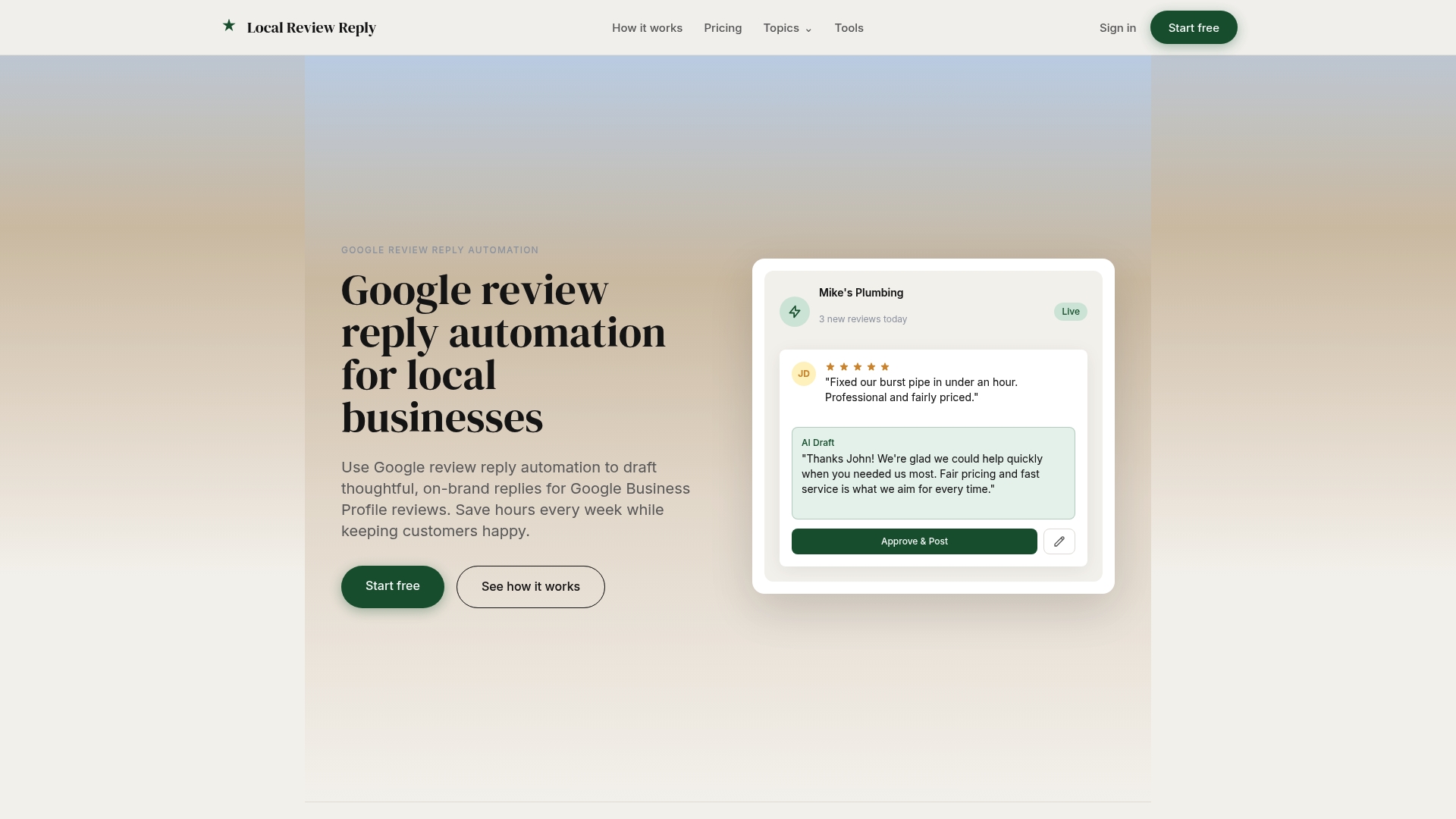
That maps directly onto the three-stage workflow covered earlier: draft, sensitivity check, publish. Instead of a manager writing every reply from scratch during a busy week, the draft is already there, and the approval gate catches the risky ones before they become a bigger problem. For franchises and agencies juggling review replies across dozens of locations, that consistency matters more than any single clever response. You can see how the approval-first workflow handles sensitive replies, or check the pricing page for the Free, Starter, Growth, Scale, and Custom plans and start a trial to see how it fits your current review volume.
Where to Verify the Rules Yourself
Don't take any of this secondhand. Google's own restricted content policy spells out removal criteria, the FTC's testimonials rule guidance covers what businesses can and cannot say in a reply, and the BBB's business tips on negative reviews offer a shorter version of the same best practices. For workflow guardrails around AI-assisted responses, 42Voice's compliance checklist is worth a look too.
Sources
- The Consumer Reviews and Testimonials Rule: Questions and answers | FTC
- Report merchant extortion – Google Business Help
- BBB Business Tip: How to handle negative reviews
FAQ
What Are Some Effective Replies to Bad Reviews?
The most effective replies acknowledge the specific complaint in the first sentence, avoid defensiveness, and offer a private channel to resolve it. Keep the tone calm even when the review isn't. Templates for different scenarios can save time without sounding robotic if you rotate the wording, and Localreviewreply's response templates are built around that same principle.
What Is a Good Example of Responding to a Review?
A strong response looks like: "We're sorry your experience didn't match what we aim for. We'd like to make this right, please email us at [contact] with your order details." It names the problem, avoids arguing, and moves the conversation offline.
How Do I Respond to Someone Who Makes an Inappropriate Comment?
Don't match their tone or argue publicly. Reply briefly, note that you're unable to engage with the language used, and offer a private contact method for any legitimate concern, then flag the review through the platform's reporting tool per Google's content policy.
How Do I Respond to Negative Feedback Politely?
Lead with acknowledgment, not justification. Thank them for the feedback, address what you can address, and invite further discussion privately. The BBB's guidance on negative reviews recommends keeping the reply short and professional rather than detailed or defensive.
How Much Does Localreviewreply Cost?
Current pricing and plan details, including the Free, Starter, Growth, Scale, and Custom tiers, are listed on the Localreviewreply pricing page.