
The right agency review response workflow runs on a monitor → draft → route → publish sequence: software catches new reviews, AI drafts a reply, routing rules decide whether it posts automatically or waits for a human, and every action gets logged. Positive reviews can post fast. Anything with legal exposure, a named employee, or a one-star rating needs a person's eyes first.
TL;DR:
- Agencies should ensure that review response workflows include clear rules for auto-posting only 4 and 5-star reviews without flagged language, while escalating anything negative or sensitive.
- Proper API credentials, role-based permissions, and compliance flags like GDPR need to be in place before automating review responses to avoid security and legal risks.
- Routing rules must be predefined to handle reviews based on star ratings, sentiment, and keyword triggers, with legal and HR issues routed to designated specialists within strict SLAs.
- A single decision owner for each client account should manage approval processes, store audit trails, and enforce revision limits to maintain consistency and transparency.
- Operational metrics such as response time and auto-post percentage, along with business metrics like star rating trends, should be tracked weekly and monthly for continuous process improvement.
Table of Contents
- What Does an Agency Review Response Workflow Look Like?
- What APIs and Permissions Do You Need First?
- How Do You Build the Step-by-Step Workflow?
- Which Rules Decide Auto-Post vs. Escalation?
- How Do You Keep Approval Queues Consistent and Auditable?
- What Metrics Prove the Workflow Is Working?
- What Do Real Agency Rollouts Actually Look Like?
- Speed, Safety, and Client Control: What's the Real Trade-Off?
- How Local Review Reply Fits Exactly This Workflow
- Where to Go for Deeper Implementation Guidance
- Sources
What Does an Agency Review Response Workflow Look Like?
A functioning review management system has six moving parts, and most agencies underbuild at least one of them.
- Ingestion pulls new reviews from Google Business Profile and other platforms via API or webhook, in near real time.
- Sentiment and risk analysis scores each review for tone, star rating, and red flags like legal threats or staff names.
- Draft generation produces an on-brand reply using templates and client-specific voice rules.
- Approval queue holds anything above a risk threshold for a named human reviewer.
- Publishing pushes the final reply back to the platform once cleared.
- Logging and CRM ticketing records what happened, when, and who approved it.
The decision logic lives between risk analysis and drafting, not after. That's where most workflows go wrong. Common integrations include Google Business Profile API access, a CRM like HubSpot or Salesforce for client context, and a ticketing tool such as Zendesk or Jira for anything escalated to a human.
What APIs and Permissions Do You Need First?
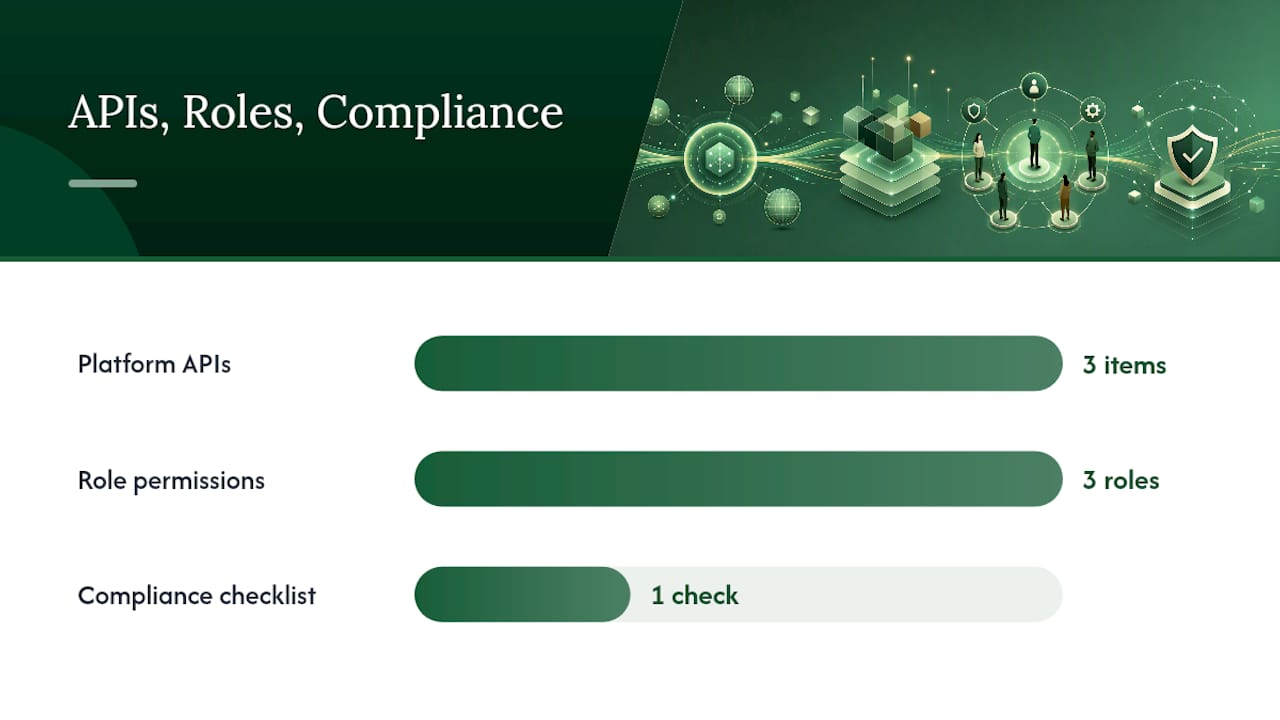
Before automating anything, agencies need three categories of access locked down: platform APIs, internal role permissions, and a compliance checklist.
You'll need Google Business Profile API credentials (or a verified third-party connector) for each client location, a service account with posting rights that doesn't expire mid-contract, and webhook access if you want near real-time ingestion instead of polling. On the permissions side, assign roles deliberately: an admin who controls routing rules and integrations, an approver who clears flagged replies, and a viewer role for clients who just want visibility.
- Platform API keys per location, refreshed on a schedule
- A named service account, not a personal login, for posting
- Admin vs. approver roles split across at least two people
- A CCPA/GDPR flag check whenever a review contains a customer's personal details
Pro Tip: Never let one person hold both admin and approver rights on a client account. If that person is unavailable, flagged reviews sit unanswered, and response time is exactly what clients notice first.
How Do You Build the Step-by-Step Workflow?
Here's the build order that keeps drafting fast without letting anything risky slip through unreviewed.
- Connect ingestion. Pull reviews via API or webhook from each platform the client uses, tagged by location and account ID.
- Enrich with context. Attach CRM data, prior review history, and any account flags (VIP client, active complaint, franchise-specific tone rules) before drafting starts.
- Generate the draft. Run the review through an AI template engine using brand-voice prompts, past approved replies, and a safety filter for profanity, legal language, or employee names.
- Run the rule engine. Star rating, keyword hits, and sentiment score decide the path: auto-post, hold for approval, or escalate to a specialist.
- Route to the approval queue. Anything held or escalated lands with a named reviewer who can approve, edit, or reject before anything goes live.
- Publish and log. Approved replies post automatically; every action, edit, and approver name gets recorded, and escalations spin up a ticket in the CRM or PM tool.
The rule engine is the piece agencies most often skip or oversimplify, and it's the one carrying the most risk. A well-built AI review response agent should auto-post positive reviews, draft-and-hold anything mixed or ambiguous, and escalate legal threats or named-employee complaints straight to a human. Automated systems should never auto-publish a reply to a negative or sensitive review; that path always routes through a person with full context on the account.
Statistic Callout: Agencies that run structured, centralized feedback loops instead of ad-hoc review handling retain clients 30 to 40 percent longer. A predictable review response workflow isn't just an operations upgrade; it's a retention lever.
Developer note: most of this runs on standard webhook triggers and a rules table (if/then conditions mapped to star rating, keyword list, and sentiment score). No-code platforms can handle steps 1 through 4 with a form-based rule builder; step 5 usually needs a lightweight approval interface, whether that's a Slack integration, a dashboard, or a dedicated tool.
Which Rules Decide Auto-Post vs. Escalation?
Every agency should write these rules down before turning automation on, not after the first bad post goes live.
- Auto-post: 4 and 5-star reviews with no flagged keywords and no employee name mentioned.
- Draft-and-hold: 3-star reviews, or any review with mixed sentiment language ("okay but," "would come back if").
- Escalate immediately: any mention of legal action, discrimination, injury, a named staff member, or a threat to report to a regulator.
Tag escalations by destination, not just severity. Legal-flagged reviews route to whoever handles the client's legal risk, HR-flagged ones go to a people-ops contact, and anything ambiguous goes to the account owner first. Response SLAs matter here: approvals on held drafts should clear within 4 business hours, and true escalations need a same-day human response, ideally within 2 hours during business hours.
Pro Tip: Build a one-line escalation summary into every routed ticket: star rating, keyword trigger, and a link back to the original review. Approvers move faster when they don't have to hunt for context.
How Do You Keep Approval Queues Consistent and Auditable?
Approval workflows fall apart when nobody owns the final call. Client feedback processes work best when one named approver per client account has sign-off authority, separate from whoever drafts or edits replies.
- Assign a single decision owner per client account, not a rotating team.
- Give approvers three options only: approve as-is, edit in the queue, or veto and reroute.
- Store every approved template, the client's voice guide, and a timestamped audit trail of who approved what.
Version control matters more than most agencies expect. Client approval workflows need defined revision limits and triggers that connect an approval to what happens next, whether that's publishing, invoicing, or a monthly report line item. A Google review approval workflow built this way turns a vague "someone will check it" process into something you can actually audit.
What Metrics Prove the Workflow Is Working?
Clients don't care about your rule engine. They care about response time, rating trends, and whether their reputation is improving month over month.
Track operational metrics weekly: average response time, percentage of reviews auto-posted versus held, and SLA compliance on escalations. Track business metrics monthly: rating trend by location, reviewer re-engagement (do customers respond to your reply?), and any correlation between response consistency and renewal conversations.
| Metric type | Example measure | Reporting cadence |
|---|---|---|
| Operational | Average response time, % auto-posted | Weekly |
| Operational | SLA compliance on escalations | Weekly |
| Business | Star rating trend by location | Monthly |
| Business | Client retention correlation | Quarterly |
A review response dashboard that surfaces these numbers automatically saves you from building a manual report every month. Cadence matters more than depth here: frequent, lighter check-ins outperform occasional deep audits for catching a slipping rating before a client notices it themselves. Bring the operational numbers to weekly internal syncs and save the business metrics for quarterly business reviews.
What Do Real Agency Rollouts Actually Look Like?
A franchise client managing several dozen locations doesn't need a workflow that looks the same everywhere. Location-level teams need visibility into their own reviews, while the franchise's central marketing team needs veto rights on anything customer-facing at scale.
- Multi-location clients benefit from routing rules that respect local manager input but keep final publish rights centralized.
- Dashboard choices matter more than most agencies assume: a single feed mixing every location's reviews buries the ones that need attention fastest.
- Author's note: agencies that set SLA clocks per risk tier (not one blanket SLA for everything) resolve escalations faster because reviewers know which tickets to open first.
The takeaway agencies keep coming back to: automation earns trust slowly, one clean audit trail at a time. Reviewing workflow proof across different client types before rolling out to a full portfolio catches edge cases a single pilot location won't reveal.
Speed, Safety, and Client Control: What's the Real Trade-Off?
Auto-posting makes sense for high-volume, low-risk reviews, mostly 4 and 5-star ratings with no flagged language. It stops making sense the moment a client's brand carries any regulatory exposure, like healthcare, legal services, or financial products, where even a friendly reply needs a compliance eye.
Franchise and multi-location clients change the math. Routing gets more layers, not fewer, because a corporate office and a local manager both have legitimate claims on approval rights. The real investment isn't the software. It's the two or three weeks of defining rules, roles, and SLAs clearly enough that approvals stop feeling like a bottleneck. Skip that groundwork and even good software just automates confusion faster.
— Ryan
How Local Review Reply Fits Exactly This Workflow
You don't have to build this from scratch. Local Review Reply is the software layer built for exactly the monitor → draft → route → publish sequence described above, without asking your team to stitch together five different tools. It drafts personalized, on-brand replies in seconds, keeps approval controls in place for sensitive and low-star reviews, and gives multi-location and franchise clients the same routing structure a manual system would take months to build.
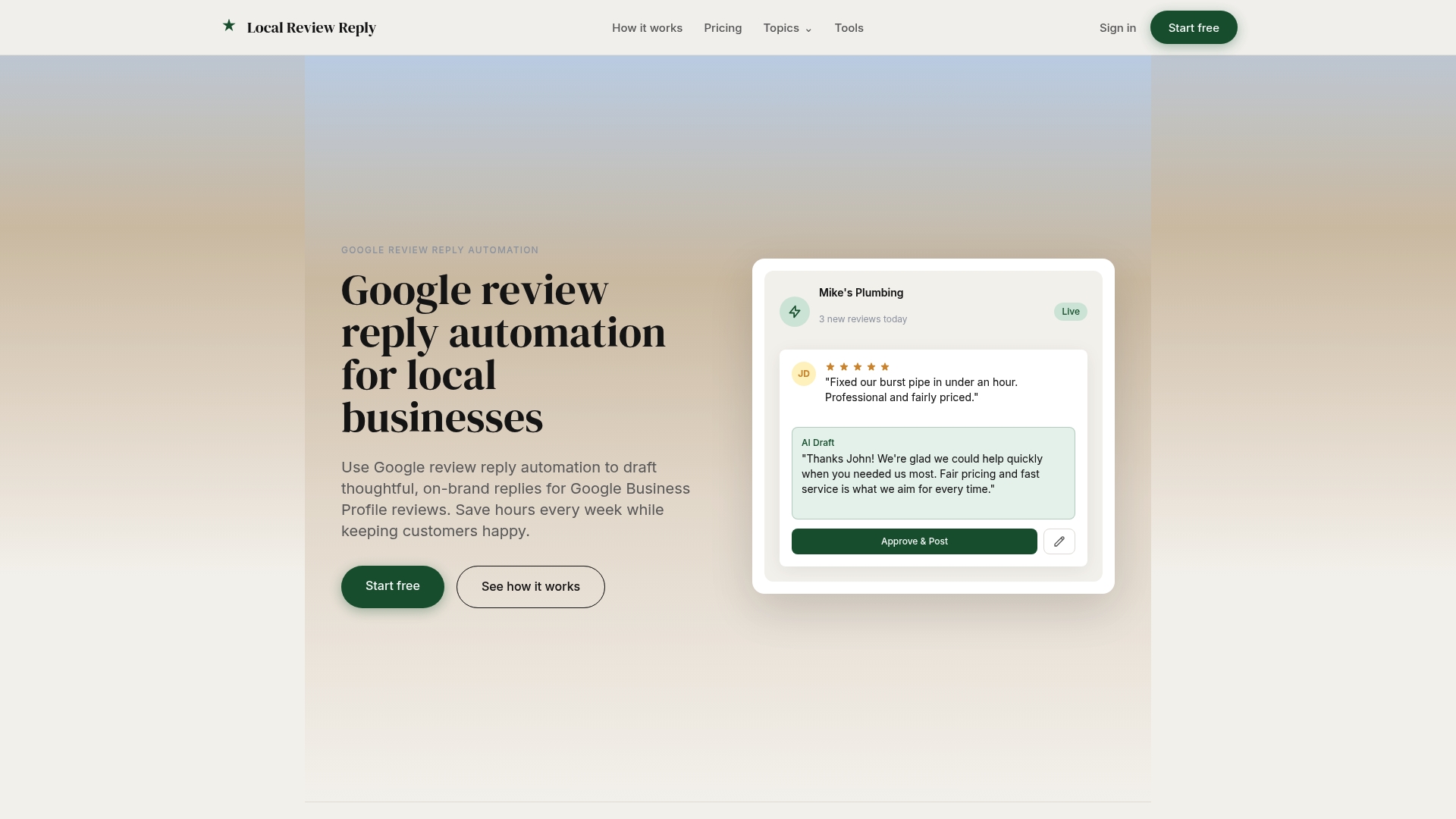
Some platforms support team roles and permissions so approvers and admins stay separated, and log every reply for audit trail purposes. If you're managing more than a handful of locations, start with a small pilot cohort: pick two or three client accounts, define your SLA tiers, and scale to the rest of your book once the approval queue is running clean. Check the feature set against your current stack, or try the free AI review response generator on a real review before committing to a full rollout.
Where to Go for Deeper Implementation Guidance
For the technical build, the AI review agent blueprint covers decision logic and escalation metadata in more depth than any single article can. On the client-management side, systematic feedback loop guidance pairs well with this workflow. For legal and reputational risk beyond reviews, reputation protection strategy is worth a read before you finalize escalation rules.
Sources
- AI Review Response Agent: A Build Blueprint for Public Review Management (2026)
- Building effective client feedback loops at your agency
- Client approval workflow for agencies
- How to build customer feedback loops that drive product roadmaps