The right first move is a calm, public reply that acknowledges the concern and invites the reviewer to continue the conversation offline. Never demand identification or try to unmask the person. Write for the hundreds of future customers who'll read that reply, not the one anonymous poster who left it.
TL;DR:
- Respond to anonymous reviews within 24 to 48 hours with a public reply that acknowledges the concern and invites offline contact for further details.
- Verify review details by cross-referencing dates, location clues, or photos with your internal records before replying or flagging the review.
- Use a four-part response template: acknowledge, validate, invite, and express intent to resolve or improve, maintaining a consistent brand tone.
- Flag reviews that violate platform policies, such as spam, hate speech, or false claims, but avoid wasting time on private investigations if records do not match.
- Implement team workflows with clear roles for drafting, approving, and escalating replies to manage high-volume reviews efficiently and maintain response quality.
Table of Contents
- What Should You Do First With Anonymous Review Responses?
- Why Are There More Anonymous Google Reviews Now?
- Can You Verify Who Left an Anonymous Review?
- How Do You Write a Reply That Works Every Time?
- What Are Some Good Templates for Anonymous Review Responses?
- When Should You Flag or Report an Anonymous Review?
- How Should Teams Operationalize Review Replies?
- Why Overreacting to Anonymous Reviews Backfires
- A Practical Next Step for Teams Managing Volume
- Where to Verify This Information
- Sources
- FAQ
What Should You Do First With Anonymous Review Responses?
A prioritized checklist keeps a stressful moment from turning into a bad decision. Anonymous review responses go wrong most often when a manager reacts emotionally instead of following a sequence.
- Within the first hour: read the review twice, resist replying while angry, and screenshot it with the date and timestamp visible.
- Within 24 to 48 hours: post a public reply that acknowledges the concern and invites the reviewer to contact you directly through email, phone, or a booking reference number.
- Same day: check point-of-sale records, booking software, and shift logs for anything matching the date and details mentioned.
- If the review clearly violates platform rules: flag it, but don't wait on that outcome before replying publicly.
- Archive everything: save the screenshot, the URL, and your internal notes in a shared folder your team can reference later.
Pro Tip: Set a recurring calendar reminder to review your flagged-review folder weekly. Reviews sometimes get removed weeks after you report them, and you'll want to confirm the outcome rather than assume it happened.
Why Are There More Anonymous Google Reviews Now?
Google rolled out a display-name feature in late 2025 that lets reviewers choose a nickname and custom picture instead of showing their real name. The account behind the review stays linked on Google's end. Only the public-facing name changes, and past reviews update automatically when someone switches their display name.
People choose pseudonyms for reasons that have nothing to do with dishonesty:
- Privacy around sensitive purchases (medical, legal, financial services)
- Discomfort with a searchable public profile tied to their real identity
- Simple preference, the same reason people use screen names on other platforms
Local-search analysts expect this to increase overall review volume while making authenticity harder to gauge at a glance. That combination means your reply consistency matters more this year than it did last year, not less.
Can You Verify Who Left an Anonymous Review?
You can investigate, but you can't unmask anyone, and you should stop trying once you've exhausted the legitimate options. Google keeps the reviewer's actual account private regardless of what display name they choose.
Practical steps that actually work:
- Cross-reference the date, time, and any details (staff name, order number, room number) against your booking system or POS records.
- Look for contextual clues inside the review itself. A mention of a specific dish, a specific technician, or a specific price point often narrows things down fast.
- Check whether photos in the review match anything in your own records or social media tags.
- Review your Google Business Profile notifications for any metadata that might accompany the review.
When none of that produces a match, accept it and move to public reputation management instead of private detective work. A reply that reads as defensive or accusatory does more damage than an unverified one-star review ever will.
How Do You Write a Reply That Works Every Time?
Every reply, whether the review is glowing or scathing, benefits from the same four-part shape. Consistency is what makes anonymous review responses feel like brand voice instead of improvised damage control.
Opening. Thank the reviewer by name if given, or simply acknowledge the feedback if it's anonymous. Skip the generic "Thank you for your feedback" opener when you can reference something specific from their comment.
Validation. Use language that shows you took the concern seriously without admitting fault you can't confirm. "That's not the experience we want anyone to have" works whether or not you've verified the visit. "We're sorry we got your order wrong" only works once you've confirmed it happened.
Invitation. Give a concrete next step: an email address, a direct phone line, or a request for a booking reference so you can look into it further. Vague invitations ("please reach out") get ignored more often than specific ones.
Close. State what you're doing to improve, or simply express hope they'll consider updating the review after you've resolved things. Google notes that customers can revise their review after a business responds, so this isn't wishful thinking.
A short do/don't list keeps the whole team aligned:
- Do reply in the brand's normal tone, not a stiffer "corporate" register reserved for complaints.
- Do respond within the same window regardless of star rating; slow replies to negative reviews look worse than slow replies to positive ones.
- Don't argue the facts publicly, even when you're confident the reviewer got something wrong.
- Don't mention the anonymity itself in a way that sounds accusatory ("since you won't give your name...").
- Don't escalate to legal threats in a public reply; that belongs in a private conversation with counsel, not the review thread.
Pro Tip: Draft your reply, then read it as if you were a prospective customer scrolling reviews, not the business owner defending a decision. That single shift in perspective catches most tone problems before you hit publish.
What Are Some Good Templates for Anonymous Review Responses?
Ready-to-adapt language saves time and keeps replies consistent across shifts, locations, and managers. These five scenarios cover most of what shows up in a typical inbox.
- Negative, unverified. "We take this seriously and would like to understand what happened. We couldn't locate a matching visit in our records. Could you email us at [address] with the approximate date and any details? We want to make this right."
- Negative, verified. "You're right, and we're sorry. We've confirmed what happened on [date] and have already addressed it with the team involved. We'd like to offer [specific remedy] if you'll reach out at [contact]."
- Suspected fake or abusive. "We couldn't find a record of this visit and take feedback accuracy seriously. If you believe this is an error, please contact us directly at [contact] so we can look into it." Report the review through Google's flagging tool afterward if it meets policy criteria.
- Positive, anonymous. "Thank you for taking the time to share this. We're glad the [specific detail mentioned] stood out. We hope to see you again soon."
- Inherited, from a previous owner. "Thank you for the feedback. This review appears to predate our current ownership as of [date], and we've made changes to [relevant area]. We'd welcome the chance to show you the difference on a future visit."
A broader library of Google review response templates covers industry-specific phrasing if your business needs more variety than these five cover, and a dedicated set of positive review response templates is useful for teams that get more five-star traffic than they know what to do with.
When Should You Flag or Report an Anonymous Review?
Reporting works for reviews that violate platform policy, not reviews you simply disagree with. Google's help documentation makes clear that replies are public and moderated before they post, and the same scrutiny applies to flagged content.
Content that commonly meets removal criteria includes:
- Reviews from someone with no plausible connection to your business (spam, competitor sabotage, off-topic rants)
- Hate speech, harassment, or explicit threats
- Reviews that reveal private personal information
- Clear conflicts of interest, like a review from a current or former employee posing as a customer
The FTC's rule against fake reviews and testimonials adds regulatory weight to this issue: the agency finalized enforcement measures targeting deceptive review practices, which affects businesses that might be tempted to manufacture fake positive reviews just as much as those dealing with fake negative ones.
When removal seems unlikely, a strong public reply and a steady flow of genuine reviews do more for your reputation over time than a rejected flag report ever will.
How Should Teams Operationalize Review Replies?
Clear roles prevent the two most common failures: replies that take too long, and replies that go out without anyone double-checking tone. A basic structure works for a single location or a fifty-location franchise.
- Responder: drafts or sends the initial public reply, usually a location manager or designated team member.
- Approver: reviews anything rated one or two stars, or anything mentioning safety, before it posts.
- Escalation owner: a named contact (with phone and email on file) for legal threats, media inquiries, or reviews alleging serious harm.
A reasonable service-level target is a public reply within 24 to 48 hours, with sensitive or low-star reviews escalated to an approver within a few hours of detection rather than sitting in a queue overnight.
Automated drafting tools can speed up the first step, but they work best paired with a human edit before anything goes live, especially for one and two-star reviews where tone matters most — a workflow supported by AI tools for small businesses.
Pro Tip: For multi-location brands, keep one corporate template with room for local edits rather than forcing every location into identical phrasing. A single central escalation contact keeps response times consistent even when local managers change.
Why Overreacting to Anonymous Reviews Backfires
Most businesses treat an anonymous one-star review like an emergency, when it's usually just Tuesday. The reviewer picked a pseudonym for privacy reasons that have nothing to do with you, and a defensive reply telegraphs insecurity to everyone else reading the thread.
What actually builds trust is boring consistency: the same tone, the same response window, the same willingness to take things offline, applied to every review whether it's glowing or brutal. Track which templates get positive reactions (reviewers updating their rating, replying to your offline invitation) and retire the ones that don't. Treat your reply process as something to refine quarterly, not something you set once and forget.
— Ryan
A Practical Next Step for Teams Managing Volume
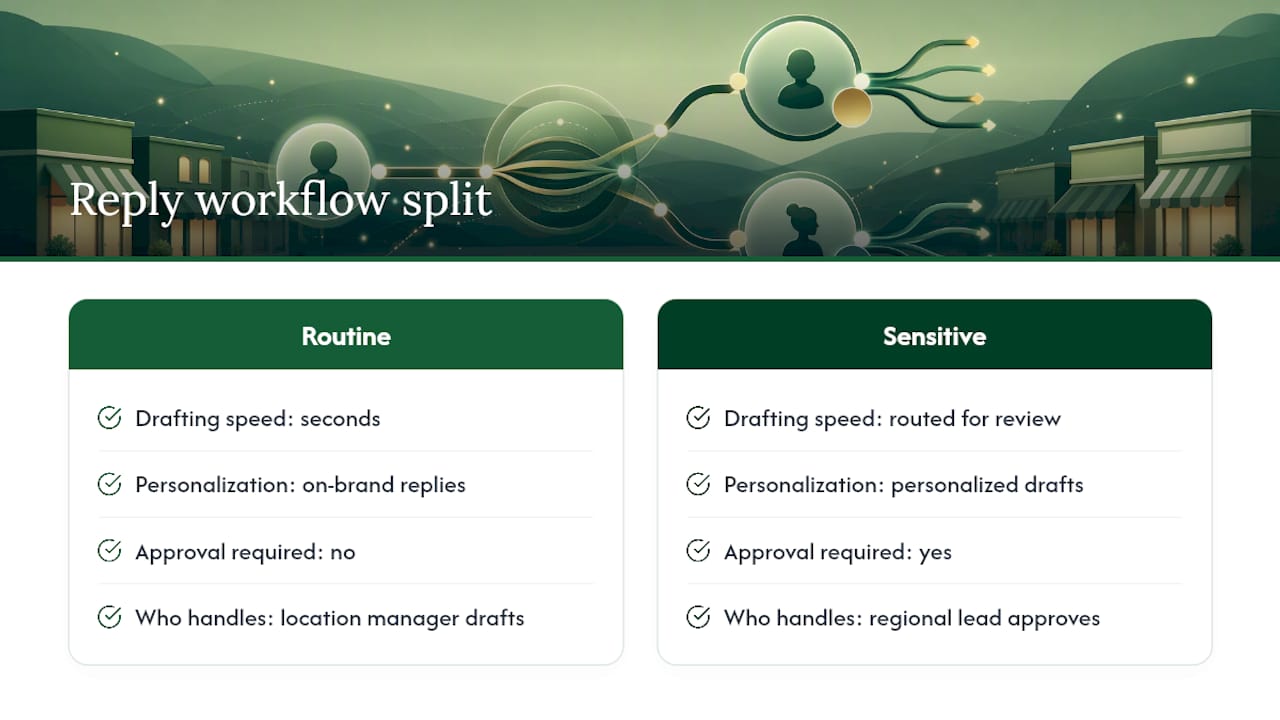
If you're handling replies across five locations or fifty, the math stops working once you're drafting each one from scratch. Local Review Reply drafts personalized, on-brand replies for Google Business Profile reviews in seconds, then routes anything sensitive, like low-star or ownership-dispute reviews, through an approval step before it posts. That combination matters specifically for the anonymous-review problem this article covers: speed on the routine replies, human judgment preserved on the ones that carry real reputational risk.
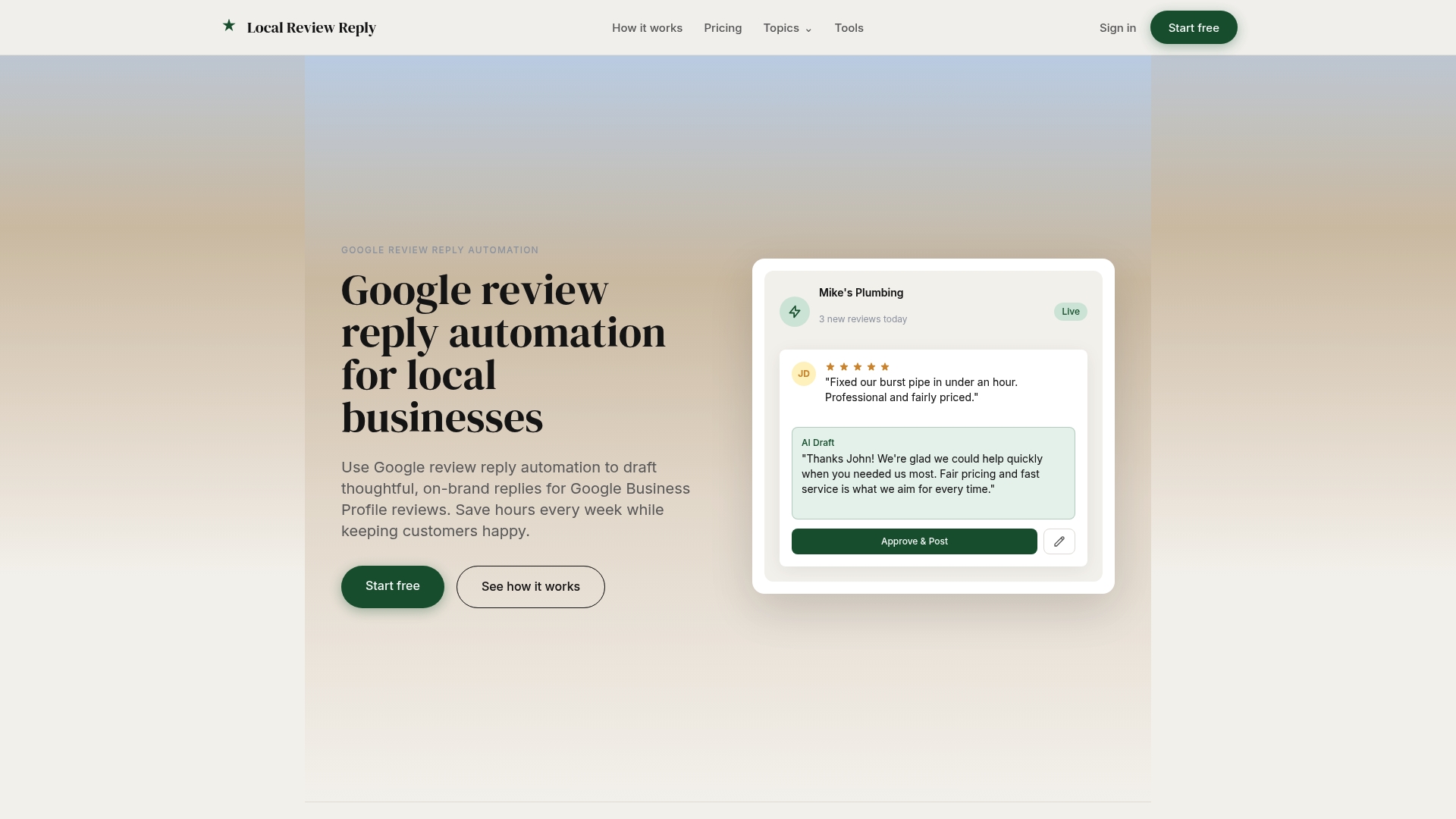
It's built for the operators who feel this pressure most: franchises juggling brand consistency across locations, multi-location businesses without a dedicated reputation team, and agencies managing reply volume for multiple clients at once. Team roles and permissions mean a location manager can draft while a regional lead approves, without anyone waiting on email back-and-forth.
Take a look at the Google review management software page to see how the approval workflow fits into an existing team structure, or try the free review response generator on a real review from your own profile to see what a drafted reply looks like before committing to anything.
Where to Verify This Information
Platform rules and enforcement policies change, so check primary sources directly rather than relying on secondhand summaries.
- Google Business Profile: manage customer reviews, for reply steps and moderation details
- Google Maps display name and reviewer settings, for how pseudonyms affect review visibility
- FTC final rule on fake reviews and testimonials, for the regulatory context around fake and deceptive reviews
- Whitespark's analysis of Google's anonymous review rollout, for practical implications on review volume
Sources
- Manage customer reviews - Google Business Profile Help
- Federal Trade Commission announces final rule banning fake reviews, testimonials
- Customers can now leave anonymous Google reviews
FAQ
What are some good responses to anonymous reviews?
The strongest replies acknowledge the concern without admitting unverified fault, then invite the reviewer to continue privately through email, phone, or a booking reference. Keep the tone consistent with how you'd respond to a named reviewer.
How do you leave a review without showing your name?
On Google, reviewers can set a display name and custom picture in their profile settings, which shows a pseudonym instead of their real name on reviews going forward. The change also applies retroactively to reviews they've already posted.
Can someone leave an anonymous Google review?
Yes. Google's late-2025 update lets users choose a nickname and photo for their public profile, so reviews appear under that display name while the underlying account stays linked privately on Google's end.
What are some examples of responses to anonymous negative reviews?
For an unverified complaint, try: "We couldn't locate a matching visit in our records, but we'd like to understand what happened. Please email us at [address] with any details you can share." For a suspected fake review, keep it brief and factual, then report it through Google's flagging tool if it meets platform policy criteria.