
Here is a disclaimer you can copy right now: "Thank you for sharing your feedback. To protect customer privacy, we cannot discuss account, transaction, or personal details in a public forum. Please contact [business] at [channel] so our team can review the matter directly." This short, plain-English line names the limitation and routes the reviewer to a private contact, which is the safest pattern for almost any public reply.
TL;DR:
- Use a reply level disclaimer only when reviews mention account or transaction details, health, legal matters, compensation, or a relationship you cannot confirm publicly.
- Since October 21, 2024, FTC rules require disclosures to be clear and conspicuous; a hidden link or vague wording cannot correct a misleading reply.
- Healthcare replies must not confirm patient status or repeat protected details; direct reviewers to a specific private channel and require human approval before posting.
- For multiple locations, use centrally approved templates and route sensitive wording through a designated compliance contact rather than letting managers improvise.
Table of Contents
- When to use a disclaimer in a review reply (and when to skip it)
- Plain-English wording rules and legal and platform constraints
- Ready-to-use templates: copy-paste disclaimers for common situations
- A minimal workflow and approval checklist before posting a disclaimer
- Where this guidance comes from and how to go deeper
- Handling disclaimers in multi-location or franchise settings
- Integration of disclaimers with automated AI review response workflows
- Best practices for training teams on using disclaimers appropriately in review replies
- Why I favor brief, boring disclaimers over clever ones
- How Local Review Reply helps teams draft and approve compliant replies
- FAQ
- Sources
When to use a disclaimer in a review reply (and when to skip it)
Not every review needs a disclaimer. A simple thank-you note or a routine complaint about wait times rarely requires one. A disclaimer earns its place when the review touches something you legally or practically should not confirm in public.
Watch for these triggers:
- The reviewer names account numbers, order details, or other transaction specifics.
- The review references a health condition, diagnosis, or legal matter.
- A commenter asks directly whether they were paid or given a discount for the review.
- The reply would otherwise require confirming someone's relationship to your business, such as patient or client status.
A website-wide disclaimer, the kind buried in a footer or a terms page, is not a substitute for a reply-level sentence. That broad disclaimer covers your whole site; it does nothing for a specific public exchange where a stranger is reading your answer right now. The Federal Trade Commission's rules and each platform's own content policies both shape whether a reply-specific line is necessary, so the decision depends on what the review actually says, not on what your legal page already covers.
Plain-English wording rules and legal and platform constraints
The rules that govern a disclaimer come from two directions: consumer protection law and platform policy. Both favor short, visible, honest language over legal boilerplate.
The FTC's Consumer Reviews and Testimonials Rule, effective since October 21, 2024, requires that disclosures be clear and conspicuous. A disclosure hidden behind a link or buried in small print does not satisfy that standard, and a vague disclaimer cannot fix a reply that is otherwise misleading about a material relationship, like a discount given in exchange for a review.
Healthcare replies carry a separate risk. The American Medical Association notes that physicians may respond to reviews, but they must never disclose patient-specific information, and confirming that someone is even a patient can expose protected health information. The safer pattern is a generic privacy statement paired with an offline escalation path.
Platform rules matter too. Google's contribution policy prohibits offering incentives for reviews and discourages soliciting biased feedback, and policy-violating content can be removed regardless of what a disclaimer says.
A short sentence tied to the actual risk, privacy, compensation, or professional confidentiality, is more effective and legally safer than a generic "for informational purposes only" line. That specificity is what separates a disclaimer that protects you from one that just looks like legal theater.
Drafting rules that hold up across situations:
- Keep the limitation specific: name what you cannot discuss, not a blanket disclaimer.
- Never confirm a customer, client, or patient relationship in a public reply.
- Avoid accusatory or defensive language, even when the review feels unfair.
- Always route the specifics to a private channel instead of litigating them publicly.
Ready-to-use templates: copy-paste disclaimers for common situations
Each template below targets a specific risk. Swap in your business name and contact channel before posting.
- General privacy template, for routine replies that mention any personal detail: "Thanks for your feedback. For privacy reasons, we don't discuss account or service details publicly. Please reach out to [business] at [channel] so we can look into this."
- Negative-review escalation template, when a complaint needs a human follow-up: "We're sorry to hear this didn't meet your expectations. We'd like to make it right, but we can't address specifics here. Please contact our team at [channel] and we'll follow up directly."
- Compensation or incentive disclosure template, when a reviewer asks about discounts or free products: "This review may reflect a promotional offer provided by [business]. We encourage honest feedback from all customers, incentivized or not, and disclose any material relationship here for transparency."
- Healthcare-safe template, which avoids confirming any patient relationship: "We're not able to confirm or discuss any patient relationship or care details in a public forum, consistent with privacy regulations. Please contact our office directly at [channel] so we can assist."
Pro Tip: Match the disclaimer's tone to your normal reply voice. A line that sounds like a legal notice stapled onto a friendly brand reads as evasive, even when the wording is accurate.
When editing placeholders, keep the channel specific: a monitored email address or a direct phone line works better than a generic "contact us" page link, since the FTC's clear-and-conspicuous standard is judged from the reader's perspective, not the business's convenience.
A minimal workflow and approval checklist before posting a disclaimer
A disclaimer only works if the process behind it catches the reviews that need one before they go live.
- Classify the review. Sort it as routine or sensitive based on whether it references health, legal, financial, or account-specific details.
- Scrub the draft. Remove any regulated personal information the reply might otherwise repeat back, even unintentionally.
- Insert the relevant disclaimer. Use the template that matches the actual risk, not a generic catch-all.
- Offer a private contact route. Name a channel the reviewer can use immediately.
- Require human approval for sensitive cases. A staff member or manager should sign off before anything touching health, legal, or compensation topics posts publicly.
- Document the follow-up. Keep a record of what was said, who approved it, and what happened next.
Pro Tip: Assign one named role, a manager, privacy officer, or front-desk lead, as the final approver for sensitive replies, so approval never becomes "whoever is online."
Escalate to counsel or a privacy officer whenever a review implicates HIPAA compliance and managed IT security or a disputed legal claim. Keep screenshots and approval logs on file in case a platform dispute or regulatory inquiry comes up later, a practice legal guidance on negative reviews consistently recommends for any business replying publicly at scale.
Where this guidance comes from and how to go deeper
This guidance draws on published regulatory and platform sources rather than guesswork, which matters when the cost of a wrong disclaimer is a compliance complaint or a removed review.
- The FTC's clear-and-conspicuous standard and the AMA's patient-privacy guidance anchor the legal boundaries described above.
- Our compliance guide for regulated businesses and HIPAA-specific review reply guidance expand on these templates for healthcare, legal, and financial teams.
- Pre-approved language paired with a software-backed approval step reduces the chance that a sensitive reply posts without a human reviewing it first, a pattern both the AMA and HIPAA-focused legal analyses recommend for regulated organizations.
Handling disclaimers in multi-location or franchise settings
A single disclaimer sentence is easy to manage for one location. It gets harder across ten, fifty, or five hundred, where each location manager might phrase things slightly differently, or miss a regulatory nuance that applies to their state or specialty.
The fix is standardization without rigidity. Franchise and multi-location operators do best with a small library of approved disclaimer templates, one for general privacy, one for compensation disclosures, one for health or legal sensitivity, that every location uses as a starting point. Local managers can still adjust tone to match their own voice, but the legal substance of the sentence stays fixed.
Centralized approval matters more as location count grows. A corporate or regional compliance contact should review any new disclaimer wording before it rolls out system-wide, and sensitive replies, especially anything touching health claims or compensation, should route through that same contact rather than being improvised at the location level.
Consistency also protects the brand during a dispute. If a regulator or platform ever asks why a particular reply was posted, having one documented, approved template in use across every location is a stronger position than a patchwork of individually worded replies that may contradict each other. Our guide for law firms and other regulated professions covers how this approval structure works in practice for businesses with strict licensing requirements.

Integration of disclaimers with automated AI review response workflows
AI drafting tools can generate a reply in seconds, which is useful, but speed is exactly why sensitive disclaimers need a checkpoint before anything posts.
A workflow that integrates disclaimers responsibly typically does three things. First, it flags reviews containing trigger language, mentions of health, payment, legal issues, or account specifics, so they are routed differently from routine reviews. Second, it pulls from a pre-approved set of disclaimer templates rather than generating new legal language on the fly, since a model has no way to know your state's specific regulatory requirements. Third, it holds any flagged reply for human approval instead of auto-posting it.

That last step is the one businesses should never skip. Automated drafting speeds up the writing, but a human still needs to confirm that a healthcare-sensitive or compensation-related reply says exactly what it should before it goes live. The HIPAA-focused legal analysis cited earlier makes the same point for healthcare specifically: automation should never auto-post a reply that touches patient status or protected information without a documented human review step. Our sensitive-topic review reply workflow walks through how that approval gate fits into a daily reply process.
Best practices for training teams on using disclaimers appropriately in review replies
The best disclaimer template fails if the person posting it does not know when to use it. Training is what turns a library of templates into consistent practice.
Start with recognition, not memorization. Staff should be able to spot the handful of trigger patterns, mentions of health, payment, legal matters, or personal account details, without needing to recall exact legal definitions. A short reference sheet with the templates from this guide, organized by trigger, works better than a long policy document nobody rereads.
Role-play a few real examples during onboarding: a negative review that names a specific staff member, a reviewer asking if they got paid for posting, a comment that references a medical visit. Walking through the right disclaimer for each build's pattern recognition faster than reading a policy in isolation.
Make escalation simple and non-punitive. A team member who is unsure whether a review needs a disclaimer should default to asking a manager rather than guessing, and that should be framed as the expected behavior, not a sign of weak judgment. Revisit the templates periodically, especially after any platform policy update or regulatory change, so the wording in use still matches current rules. Our review response guidelines offer a broader checklist that pairs well with this kind of training cadence.
Why I favor brief, boring disclaimers over clever ones
Clever disclaimers age badly. A sentence trying to sound reassuring or brand-forward often ends up vaguer than the legal moment requires, and vague is exactly what the FTC's clear-and-conspicuous standard punishes.
The trade-off is real: public replies build trust with everyone reading them, but specifics belong in private channels, not in a comment thread. I'd rather see a business look slightly formal in public than overshare something it cannot take back.
If you manage more than a handful of locations or reviews, a short approval checklist, classify, redact, disclaim, route, approve, document, costs you almost nothing and prevents the one mistake that costs the most.
— Ryan
How Local Review Reply helps teams draft and approve compliant replies
Drafting a compliant disclaimer for every sensitive review, across every location, is where manual reply management breaks down fastest. We draft personalized, on-brand replies and support approval controls for sensitive and low-star reviews, so a flagged reply waits for a human sign-off instead of posting automatically.
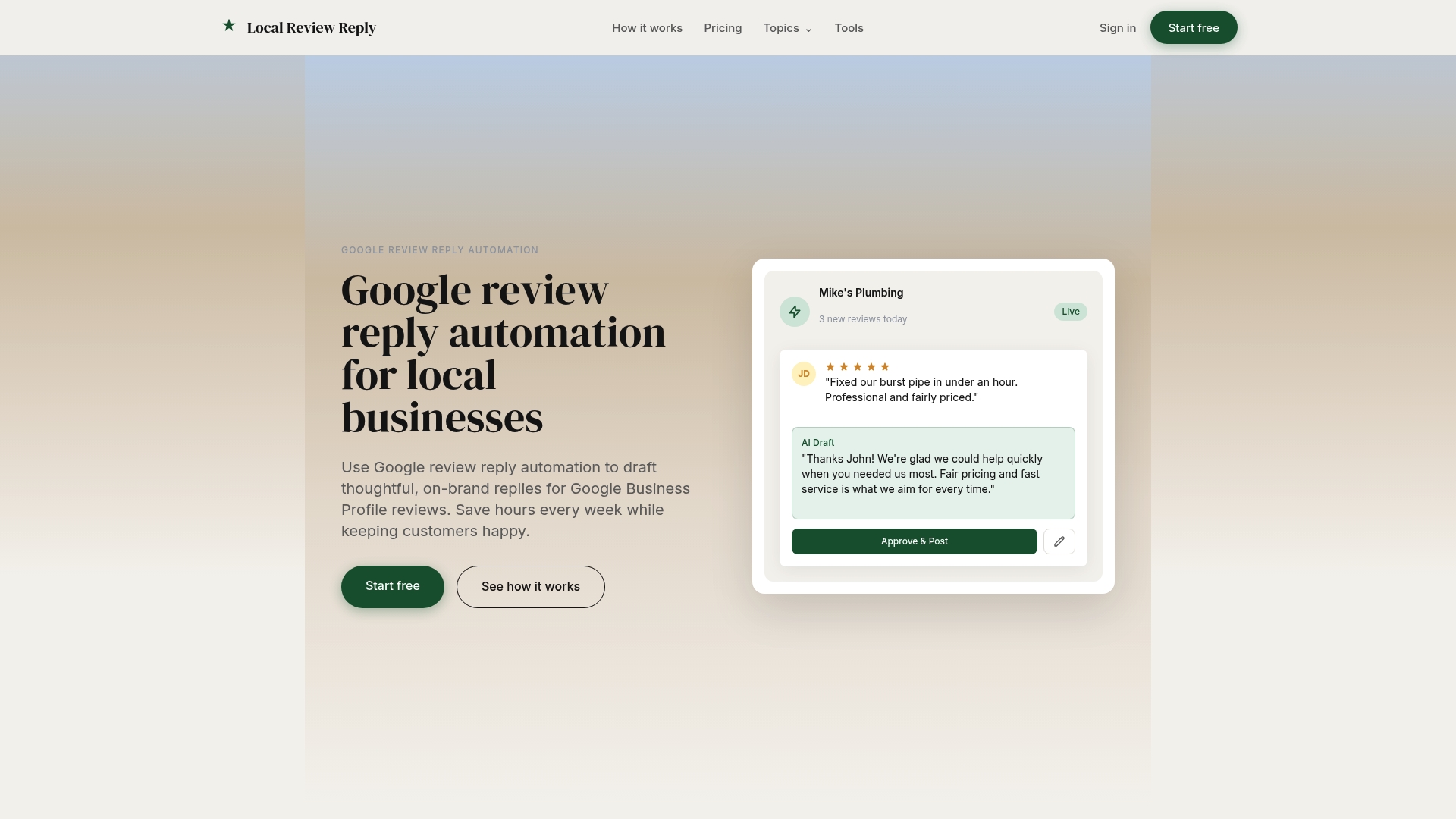
For regulated businesses and multi-location teams, that combination, fast drafting plus a required approval step, keeps replies consistent without removing human judgment from the sensitive cases that need it. You can compare plans, including Starter, Growth, and Scale, on our pricing page, or browse ready-made reply templates to see how the wording in this guide fits into a working reply.
FAQ
What is a good disclaimer example?
A good example is brief and names the specific limitation: "Thank you for sharing your feedback. To protect customer privacy, we cannot discuss account, transaction, or personal details in a public forum. Please contact [business] at [channel] so our team can review the matter directly." This works because it is clear, specific, and routes the reviewer to a private channel instead of continuing the conversation publicly.
What is a disclaimer for reviews?
A review disclaimer is a short statement in a public reply that explains what the business cannot confirm or discuss, usually for privacy, legal, or compensation reasons, and that directs the reviewer to a private contact for specifics. It differs from a website-wide disclaimer, which covers the whole site rather than one specific exchange.
What is the appropriate wording for a disclaimer?
Appropriate wording is plain, specific to the actual risk, and visible rather than hidden behind a link, matching the FTC's clear-and-conspicuous standard. It should name the limitation, avoid legal jargon, and offer a private channel for follow-up rather than relying on a generic "for informational purposes only" phrase.
Does disclaimer mean warning?
Not exactly. A disclaimer states a limitation on what can be discussed or confirmed, while a warning typically flags a risk or danger; in review replies, the disclaimer's job is to protect privacy and compliance, not to alert the reader to harm.
Sources
- The Consumer Reviews and Testimonials Rule: Questions and Answers | Federal Trade Commission
- Are physicians prohibited from responding to online patient reviews? | AMA
- Prohibited & restricted content - Maps User Generated Content Policy Help
- Responding to Negative Reviews Without Legal Trouble | Itkin Law
- How Can Healthcare Providers Respond To Online Patient Reviews Without Violating HIPAA? - Healthcare - United States