
The right move when a review discloses something sensitive is a short, non-confirming public reply paired with two things happening at the same time behind the scenes: a platform report citing the exact policy violated, and an internal intake that documents everything and loops in legal if needed. Post something brief. Report it if it breaks platform rules. Save the receipts before you do either.
TL;DR:
- Respond with a brief, non-specific public reply that acknowledges the issue and directs the reviewer offline to prevent legal exposure.
- File a platform report citing the exact policy violation and document all evidence, including timestamps and screenshots, immediately upon seeing the review.
- Never confirm or deny leaked, medical, or confidential details in public replies, always routing sensitive follow-up through private channels.
- Use an approval workflow with pre-written language for high-risk responses, involving legal review before posting to ensure compliance and control.
- Follow up within 24 to 72 hours to confirm offline conversations and monitor platform actions, updating internal procedures based on outcome and feedback.
Table of Contents
- What Are Sensitive Topic Review Replies and Why Do They Need a Different Playbook?
- Quick Checklist: The Three-Track Response To Run in Parallel
- How Do You Write a Public Reply Without Confirming the Sensitive Detail?
- When and How Do You Request Removal or Report a Policy Violation?
- How Should You Handle Confidential or Medical (HIPAA) Disclosures in a Review?
- How Do You Operationalize Safe Replies With Approval Workflows?
- What Happens After the Initial Reply: Timelines and Closure
- Balancing Speed, Empathy, and Legal Safety
- Where Local Review Reply Fits Into Your Sensitive-Reply Workflow
- Primary Sources and Platform Policy References
- Sources
- FAQ
What Are Sensitive Topic Review Replies and Why Do They Need a Different Playbook?
A sensitive review isn't just a one-star complaint about slow service. It's one that names an employee, alleges harassment, discloses a medical condition, leaks pricing or contract terms, or accuses your business of something that could expose you to legal risk if handled wrong. Standard review-response advice, thank them, apologize, invite them back, doesn't hold up here. Say the wrong thing publicly and you can turn a bad review into a defamation dispute, a HIPAA problem, or a permanent, searchable confirmation of a private detail nobody should have seen.
The FTC's rule on consumer reviews and testimonials adds a legal floor under all of this: businesses can't use intimidation or false public accusations to suppress a negative review, and violating that rule can trigger regulatory fines. That single fact should shape every public reply you write for a sensitive situation. You're not trying to win the argument in the comments. You're trying to close the loop safely, quickly, and without creating new liability.
Quick Checklist: The Three-Track Response To Run in Parallel
Sensitive reviews need three things happening at once, not in sequence. Waiting to report a violation until after you've drafted the perfect public reply wastes time you don't have.
- Track A, public reply. Post something brief that acknowledges the situation and moves it offline. Nothing more.
- Track B, platform report. File a report that cites the exact policy clause the review violates, whether that's personal data exposure, harassment, or confidential business information.
- Track C, internal intake. Collect screenshots, timestamp the discovery, log the reviewer's contact details if available, and flag legal immediately if the content touches privacy or defamation risk.
Documentation matters more than most owners realize. Screenshot the review the moment you see it, since edited or deleted reviews can be hard to prove later. Store the file with a timestamp and the name of whoever found it. If the review names an employee or alleges misconduct, treat that file the same way you'd treat an HR complaint: locked down, access limited to the people who need it. Our guide on Google review policy violations walks through the decision points between reporting and replying in more detail.
How Do You Write a Public Reply Without Confirming the Sensitive Detail?
Every safe public reply follows the same three-part formula: acknowledge the emotion, skip the specifics, and offer a real path offline. That structure lines up with the FTC's own best-practice guidance on review responses, which recommends keeping public replies concise and non-committal to avoid creating a legal admission you can't take back.
Here's what that looks like in practice:
- Acknowledge, don't confirm. "We take feedback like this seriously and would like to understand what happened." Notice there's no repetition of the allegation.
- Never deny specific private details in public. If a reviewer claims you disclosed their diagnosis, don't write "we never discussed your diagnosis." That sentence itself confirms a diagnosis exists.
- Offer a real offline path. A named contact, a direct phone line, or an email address, not just "please reach out."
- Skip the apology-for-fault language. "We're sorry this happened" is fine. "We're sorry we did X" is an admission if X is disputed.
A few adapted examples:
Service failure with an angry tone: "We're sorry your visit didn't go the way it should have. We'd like to make this right. Please call us at [number] so we can look into what happened."
Profanity or personal attack on staff: "We take concerns about our team seriously and would like to discuss this directly. Please contact us at [email] so we can address it properly." Our 48 hour response flow for profanity has more pre-built language for this exact scenario.
Leaked confidential or medical detail: "We're aware of your comment and take privacy concerns seriously. Please contact us directly at [number] so we can address this appropriately."
Pro Tip: Draft two versions of every sensitive reply before posting, one that's honest about the emotion and one that's stripped of anything that could read as confirmation. Nine times out of ten, the second version is the one you actually post.
When and How Do You Request Removal or Report a Policy Violation?
Not every harsh review is removable, and treating a legitimate complaint like a policy violation just burns credibility with the platform. Removal requests work best when the review actually breaks a documented rule, not when it's simply unflattering.
Categories that commonly qualify for takedown include reviews that expose personal data (phone numbers, addresses, medical information), disclose proprietary or confidential business details, contain hate speech or targeted harassment, or amount to doxxing an employee. Platform moderation systems are far more likely to act when your report names the exact clause that's been violated rather than a generic "this is unfair" complaint, a pattern confirmed in reporting guidance on platform takedown policies. The same principle shows up in platform-side moderation documentation: reports that clearly identify personal information, harassment, or off-topic content get resolved faster than vague ones.
Structure the report like this:
- Quote the specific policy language you believe was violated.
- Attach screenshots and a timestamp.
- State plainly what you're requesting (removal, redaction, or a warning to the reviewer).
Response times vary by platform and are rarely published as guarantees, so track your report and follow up rather than assuming silence means denial. If the platform refuses, most have an appeal path, and if the disclosure is serious enough, that's the point to loop in counsel rather than filing the same report again.
How Should You Handle Confidential or Medical (HIPAA) Disclosures in a Review?
There's one rule that overrides everything else when a review leaks confidential or medical information: never repeat, confirm, or quote the specific detail in your public reply. Confirming a leaked detail, even to deny it, amplifies the disclosure and can create a permanent, searchable record of something that should never have been public in the first place.

For healthcare-adjacent businesses, that non-confirmation rule intersects directly with HIPAA. If a review references a patient's condition, treatment, or visit details, don't discuss any of it in the public thread, even generically. Route the follow-up through a HIPAA-compliant private channel, and document every step your staff takes, who saw the review, who responded, and how the offline conversation was handled.
When a review discloses genuinely confidential or proprietary information, run three tracks simultaneously: a platform takedown citing the confidentiality violation, counsel-led escalation if the source is identifiable (a former employee under NDA, for instance), and a brief non-confirming public reply.
- Never quote or paraphrase the leaked detail, even to correct it.
- Route medical-adjacent conversations to private, HIPAA-aware channels only.
- Loop in a privacy officer or counsel before responding if the disclosure identifies a specific patient or client.
How Do You Operationalize Safe Replies With Approval Workflows?
None of this works as a one-off decision made under pressure. It needs roles defined before the sensitive review ever shows up: someone drafts, someone approves, and someone knows exactly when to escalate to counsel. Without that separation, the person most upset about the review is often the one hitting "reply," which is precisely how public replies turn into legal exposure.
Build a vetted library of pre-approved phrases for high-risk categories, harassment allegations, service failures with legal undertones, and confidential leaks, and test them against realistic scenarios before you need them live. Legal and reputation specialists consistently flag emotional, off-the-cuff public responses as the single most common and preventable mistake in sensitive review handling.
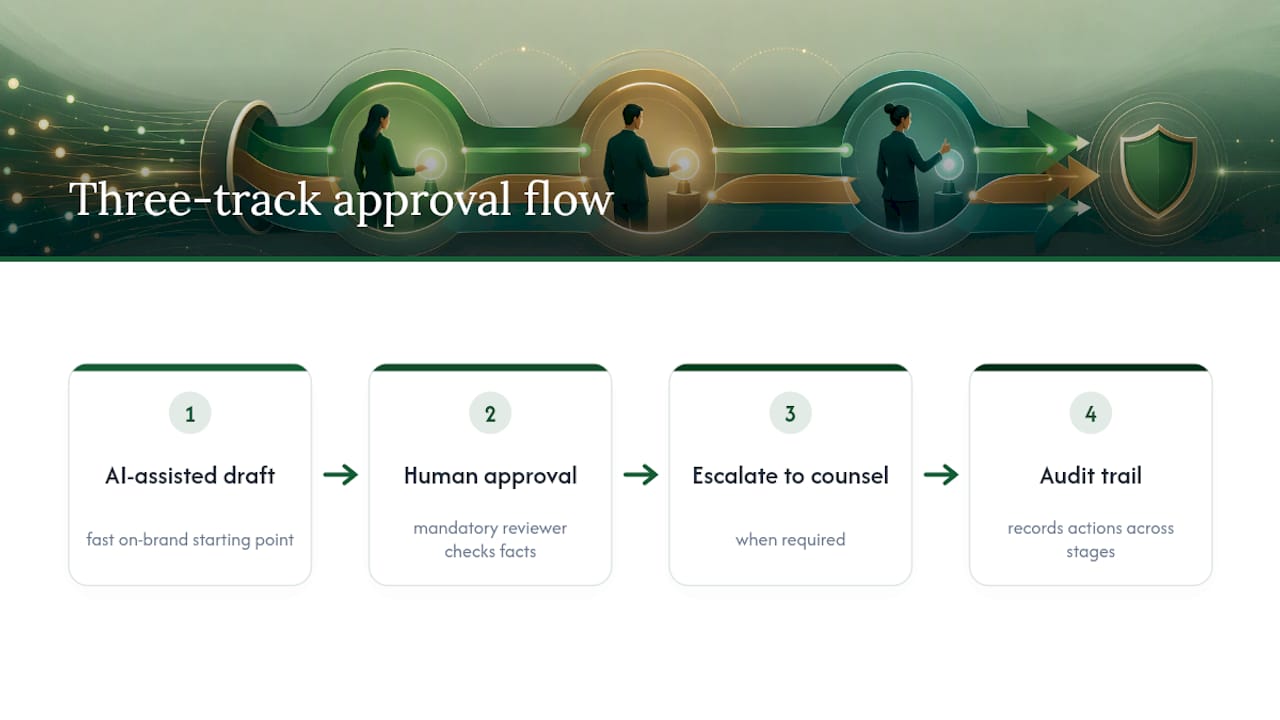
This is where AI-assisted drafting earns its place, but only with a human gate attached. A drafting tool can produce a fast, on-brand starting point for a sensitive reply in seconds. It should never post without a reviewer checking it against the specific facts of the situation first. The combination, fast drafting plus a mandatory human approval step and an audit trail, is what keeps speed from becoming a liability.
Pro Tip: Run a tabletop exercise twice a year: pick a fake sensitive review, have your team draft and route it through your real approval chain, and time how long it takes. If it takes longer than your actual incident response window, fix the workflow before a real one shows up.
What Happens After the Initial Reply: Timelines and Closure
Sensitive reviews don't end when you hit "post." Set a clear follow-up rhythm and stick to it.
- 24 to 72 hours: Confirm the offline conversation actually happened, and check whether the platform report has moved.
- Platform-dependent appeal window: If your takedown was denied, file the appeal with additional documentation rather than repeating the same request.
- 7 to 14 days: Close the internal file. Note what worked, what didn't, and whether the language bank needs a new template.
Only post a public update if it materially changes the record, a resolved dispute or a corrected factual error, not just to look responsive. Every closed case should feed back into your workflow: if a phrase worked well, add it to the library; if a policy report got rejected, note the exact wording the platform wanted.
Balancing Speed, Empathy, and Legal Safety
The instinct to respond fast and the discipline to respond carefully pull in opposite directions, and most businesses default to speed because silence feels worse. It usually isn't. A calm, consistent public voice protects you more than winning an argument in the replies ever will, because the audience reading your response isn't the angry reviewer. It's every future customer scrolling past.
The trade-off between rapid response and legal caution is real, but it shrinks fast once you've rehearsed it. A team that has run a tabletop exercise on a leaked-detail scenario responds in minutes with confidence, not in hours with anxiety. Schedule a standing review of your language bank every quarter. Sensitive situations don't repeat in exactly the same form twice, but the muscle memory transfers.
— Ryan
Where Local Review Reply Fits Into Your Sensitive-Reply Workflow
Local Review Reply gives you the speed of AI drafting without handing away the control this article just walked through. It drafts a personalized, on-brand starting point for a sensitive reply in seconds, but nothing posts until a human reviewer approves it, which is exactly the gate Track A of your three-track response needs. For franchises and multi-location operators, that approval control matters even more: one location's poorly worded reply to a sensitive review can become every location's problem overnight, so consistent, reviewed phrasing across your whole footprint is the real advantage over trying to manage it location by location.
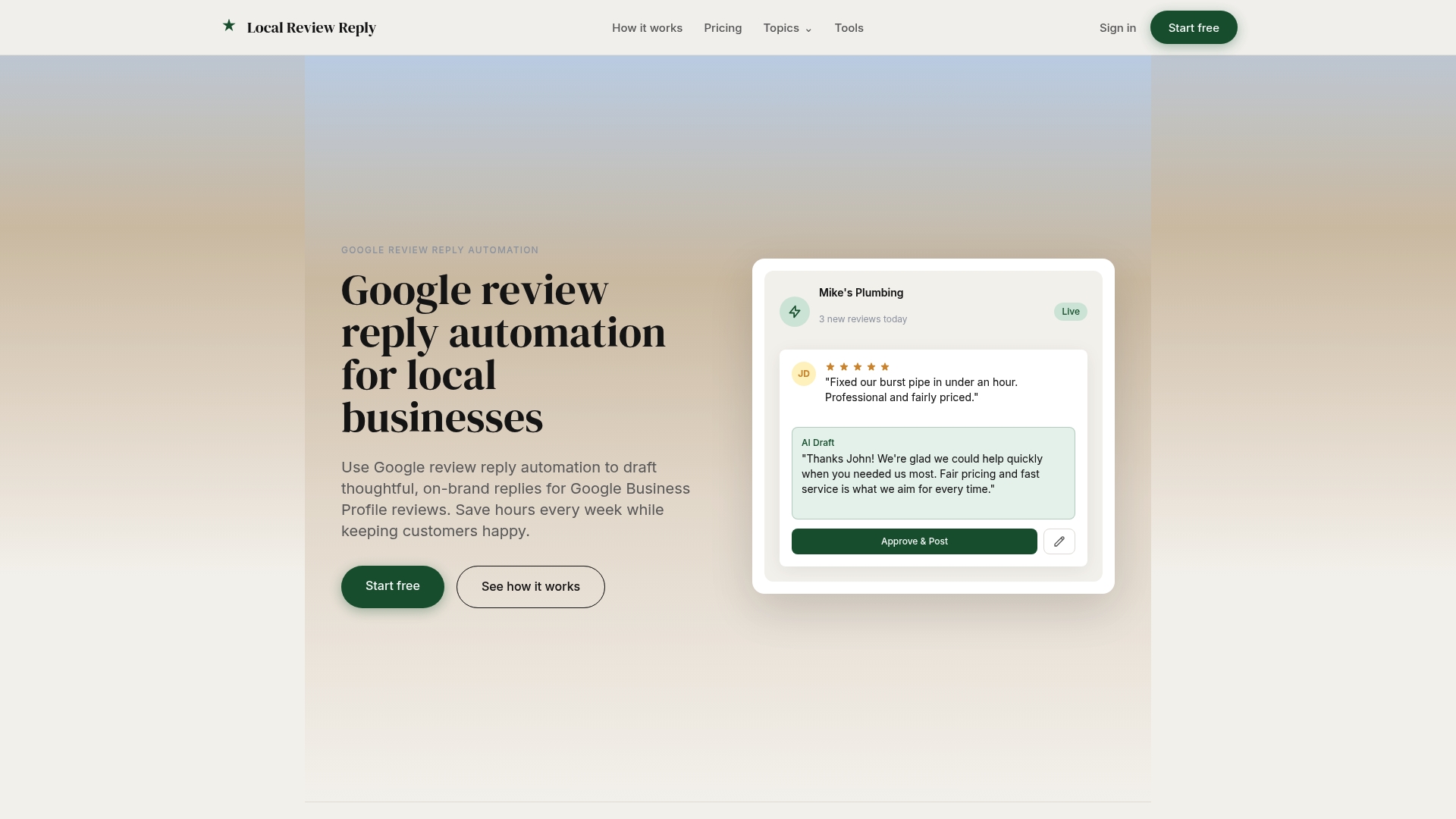
The platform's approval workflow controls are built specifically for low-star and sensitive-review scenarios, letting a manager or legal reviewer sign off before anything goes public, with an audit trail behind every reply. If you manage reviews across several locations, the multi-location review reply tools apply that same drafting-plus-approval structure at scale instead of leaving each site to improvise. Try the free AI review response generator on your next sensitive review and see how the draft compares to what you'd write from scratch, then route it through your own approval step before it ever goes live.
Primary Sources and Platform Policy References
This guide draws on FTC guidance on reviews and testimonials, documented platform reporting and takedown procedures, and practitioner resources on handling confidential disclosures, all linked throughout the sections above.
This article is general information, not a substitute for advice from a qualified lawyer. Consult a qualified legal professional about your own circumstances before acting on anything here.
Sources
- FTC consumer reviews and testimonials guidance
- How to remove a negative review: platforms and policies (IFPI excerpt)
- How do you handle a review that reveals confidential information? (FiveBlocks)
- How to moderate reviews (Sendlane help article)
- Guidance on handling sensitive disclosures (psychiatry/clinical perspective)
FAQ
What Is the Safest First Move on a Sensitive Review?
Post a brief public reply that acknowledges the concern without confirming any specific detail, then move the conversation to a private channel immediately.
Should I Ever Deny a Specific Claim in a Public Reply?
No. Denying a specific detail, like a diagnosis or a leaked figure, can itself confirm that the detail exists, so keep public replies non-committal.
When Should I Report a Review Instead of Just Replying?
Report it when the content violates a specific platform policy, personal data exposure, harassment, doxxing, or confidential disclosure, and cite that exact clause in your report.
Does HIPAA Apply to How I Respond to a Review?
If a review references a patient's condition or treatment, route any follow-up through a HIPAA-compliant private channel and never discuss those details publicly, even to correct them.
Can AI Draft Sensitive Review Replies Safely?
AI drafting tools like Local Review Reply can produce a fast, on-brand starting point, but a sensitive reply should always pass through human approval before it posts.