Reply to any review that still shapes what today's customers think of your business, and reply as the new owner, in the present tense. If replies from before the sale look deleted or missing, don't panic yet: confirm you're set as the primary owner, check the profile in an incognito window, and give it 24 to 72 hours before you escalate anything. The templates, troubleshooting steps, and checklist below cover the rest.
TL;DR:
- Only respond to recent low-star reviews from the past 60 to 90 days that highlight ongoing safety, health, or quality issues likely to recur under new management.
- Use a simple, consistent reply formula that acknowledges the experience, states the ownership change, offers a next step, and provides offline contact, avoiding arguments or promises.
- Confirm primary ownership status, wait up to 72 hours for reply visibility after a transfer, and escalate to support if responses remain missing beyond that period.
- Focus on generating fresh, positive reviews from recent customers, as they outweigh older responses in shaping current public perception.
- Establish clear governance during ownership transitions by assigning review responsibilities and creating logs, to prevent overlooked responses and ensure accountability.
Table of Contents
- How to decide which legacy reviews need a reply
- A simple formula for replying as the new owner
- Reply templates for common ownership-transition scenarios
- Why replies disappear after an ownership transfer, and how to get them back
- Rebuilding trust with fresh reviews after the sale
- Who owns review replies after the sale: a short governance checklist
- How Local Review Reply supports owners through this transition
- What actually matters here: the editorial take
- Get help implementing this without adding another job to your plate
- Sources
How to decide which legacy reviews need a reply
Not every old review deserves your attention. Use a simple test: does the complaint describe a problem that could still be happening today, or does it misrepresent the business as it currently operates? If yes, reply. If the review is a two-year-old rant about a since-fired employee or a menu item you no longer serve, leaving it alone is usually the right call.
Prioritize reviews with these signals:
- Low-star ratings from the last 60 to 90 days that still show up prominently on your profile.
- Complaints about safety, health, or quality issues that could easily repeat under new management.
- Reviewers who mention they'll "update this review" if things improve, since they may check back.
- Reviews ranking near the top of your profile because Google surfaces them as relevant or recent.
Skip replying to purely historical complaints tied to staff, pricing, or systems that no longer exist. A reply there just resurfaces an old story that has nothing to do with how you run things now.
A simple formula for replying as the new owner
You don't need a different reply for every review. A short, repeatable formula keeps your team consistent and keeps you out of arguments you can't win in public. Use this sequence:
- Acknowledge what the reviewer experienced, without confirming or denying details you didn't witness.
- State the ownership change plainly and in the present tense: "This business is now under new ownership as of [timeframe]."
- Offer a concrete next step, whether that's a fix, a refund policy, or simply an invitation to discuss.
- Give a direct contact route, such as a phone number or email, so the conversation moves offline.
Keep the language collective ("we," "our team") rather than personal. Never apologize for actions you can't verify happened, and never argue facts in public. Reputation management practice generally treats public disputes as a losing move: inviting the reviewer to a private conversation protects your credibility more than winning an argument ever does.
Avoid promises you can't keep and anything that reads like an admission of fault for something the old ownership did. If a review touches on a safety incident, injury, or legal threat, move it offline immediately and loop in whoever handles claims or legal risk for your business.
Pro Tip: Draft one master reply per scenario type (negative legacy, positive legacy, misattributed complaint), then adapt the specifics. It's faster than writing from scratch and keeps your tone consistent across every reply your team sends.
Reply templates for common ownership-transition scenarios
Three scenarios cover most of what you'll face after a sale. Adjust the specifics, but the bones of each template hold up.
- Legacy negative review: "Thank you for sharing this. This business changed ownership in [month/year], and we're addressing the issues you raised under new management. We'd like to make this right. Please reach us at [contact] so we can follow up directly."
- Legacy positive review: "We appreciate this. Ownership changed in [month/year], and we're working hard to keep the experience you described, or improve on it. Hope to see you again soon."
- Misattributed or staff-specific complaint: "We're sorry to hear this happened. This business is under new ownership as of [month/year], so we don't have full visibility into this specific interaction. We'd welcome a chance to hear more; please contact us at [contact] to confirm the details."
Personalize the bracketed details every time, and never copy a competitor's phrasing wholesale. If a review alleges discrimination, fraud, or a safety violation, escalate to legal review before posting anything public. For more scenario-based language, see this personalized reply template guide.
Why replies disappear after an ownership transfer, and how to get them back
Missing replies after a sale are usually a permissions problem, not a deletion. Reply data can stay mapped to the previous owner's account ID during the handoff, and profile changes don't always propagate to every device or dashboard view at the same time.
Run through this order before assuming anything is gone:
- Open your Google Business Profile in an incognito or private browser window to see what's actually public.
- Confirm you hold primary-owner status on the account, not just manager access.
- Wait 24 to 72 hours. Recovery guidance from Hyvo notes that propagation typically takes 24 to 48 hours, and dashboard rendering glitches can hide replies that are technically still live.
- If replies remain missing past 72 hours, ask the previous owner to run a Google Takeout export of their account data, and log the exact timestamps of when you noticed the gap.
- If the previous owner is unresponsive, escalate directly to Google Business Profile support with your documented timeline. Google's own community support thread on ownership handoffs shows this is a common enough problem that other owners have had to push through the same channel.
If a reply is truly gone after 72 hours and the original review is still live, it's usually better to post a fresh, brief reply as the new owner than to keep chasing a recovery that may never come through.
Rebuilding trust with fresh reviews after the sale
New reviews do more to shift perception than any reply ever will. A steady stream of recent, positive feedback pushes older complaints further down the page and gives future customers current evidence of how you operate.
Ask recent, paying customers first. Timing matters: a request sent within a day or two of service gets a better response than one sent weeks later. Spread the ask across email, text, and printed receipts rather than relying on one channel.
- Frame the ask around honest feedback and recent improvements, not a push for five stars.
- Segment requests to customers who had a genuinely good experience, rather than blasting your entire list.
- Track review velocity weekly. A consistent inflow of new reviews matters more than any single glowing one.
- Never offer incentives, discounts, or payment in exchange for reviews. That violates Google's platform terms and can get reviews removed or your profile flagged.
Pro Tip: Mention the ownership change briefly in your review request message. Customers who know the business changed hands are more likely to leave a review that reflects the current experience, not an old one.
Who owns review replies after the sale: a short governance checklist
Review management often falls through the cracks during a transition because nobody formally owns it. That's a governance gap, not a small oversight: transition governance research from FMI Corp points out that clarity about who is responsible for public-facing functions, like review replies, is one of the factors that separates transitions that hold together from ones that don't.
Set this up in the first two weeks after close:
- Name a person or role responsible for daily review monitoring.
- Assign a secondary approver for any low-star or sensitive reply before it posts.
- Set a response-time target for sensitive replies, and a separate escalation path for anything touching legal or safety risk.
- Archive every reply and any offline remediation notes so you have a record if a dispute resurfaces later.
| Governance element | Who's responsible | Why it matters |
|---|---|---|
| Daily review monitoring | Named manager or team lead | Prevents reviews from sitting unanswered for days |
| Approval for sensitive replies | Secondary approver (owner or ops lead) | Reduces risk of a defensive or liability-admitting reply going public |
| Escalation for legal/safety issues | Legal contact or claims handler | Keeps risky disputes off the public review thread |
| Audit log of replies and notes | Whoever owns the review workflow | Creates a record if a complaint or dispute resurfaces |
Tools like Google Business Profile review management workflows can formalize these roles instead of leaving them as tribal knowledge that walks out the door with the outgoing manager.
How Local Review Reply supports owners through this transition
Localreviewreply drafts on-brand replies in seconds and routes sensitive, low-star reviews through an approval step before anything posts, which matters most in the weeks right after a sale. Franchise operators can see this in practice in the Homesafe franchise review reply workflow case study. If you're setting this up yourself, start with role-based permissions and an audit log from day one. It's far easier than retrofitting accountability after a reply goes out wrong.
What actually matters here: the editorial take
Most advice on this topic treats every old review as a public relations emergency. It isn't. The reviews that matter are the ones still shaping what a customer searching your business name sees this week, not the ones buried three pages deep from four years ago. Owners who try to respond to everything burn time relitigating history instead of building a current track record that speaks for itself.
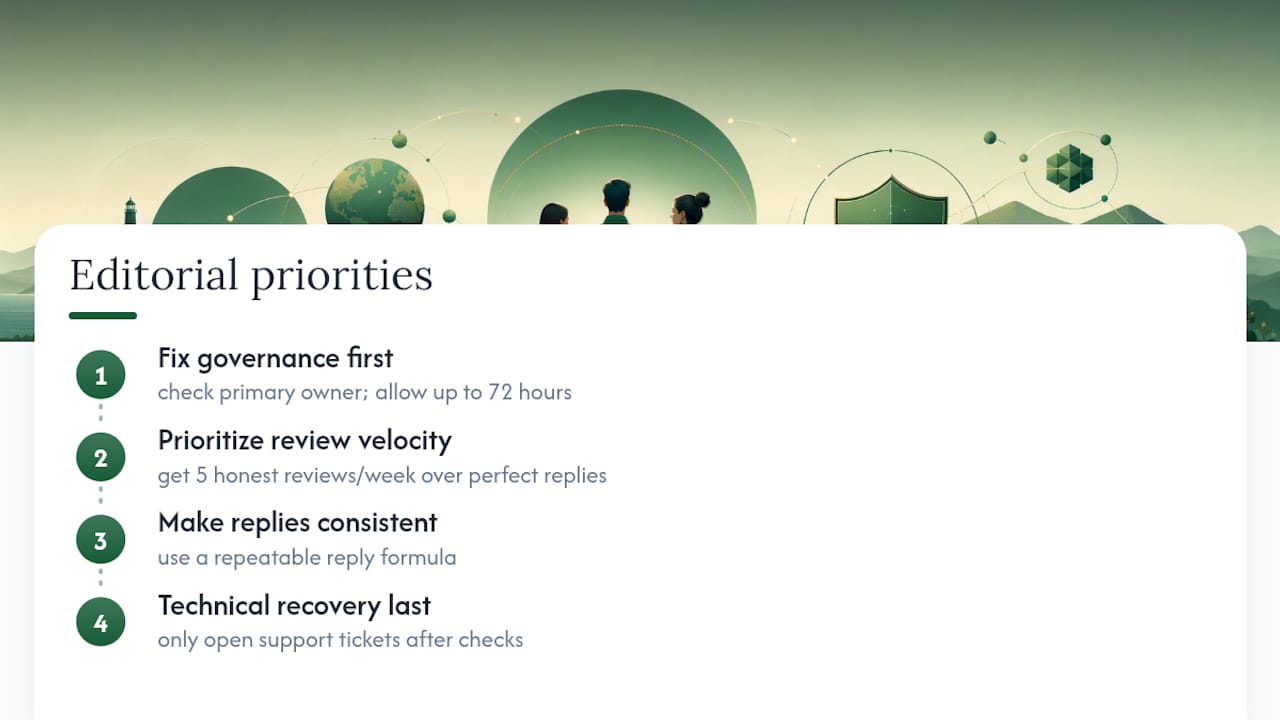
The conventional wisdom also underrates how often "missing" replies are a permissions issue, not a real loss. Jumping straight to Google support before checking primary-owner status and waiting out propagation wastes a support ticket on a problem that often fixes itself within 72 hours.
If you take one thing from this: prioritize review velocity over reply perfection. A business generating five honest new reviews a week will outrun its legacy complaints faster than any perfectly worded response to a two-star review from three owners ago. Fix the governance gap first, get the reply formula consistent second, and treat technical recovery as a last resort, not a first instinct.
— Ryan
Get help implementing this without adding another job to your plate
Localreviewreply exists for the exact moment you're in right now: dozens of legacy reviews needing a consistent voice, and no time to write each reply from scratch. It drafts personalized, on-brand replies for your Google Business Profile in seconds, and routes any sensitive or low-star review through an approval step so a human signs off before anything goes public.
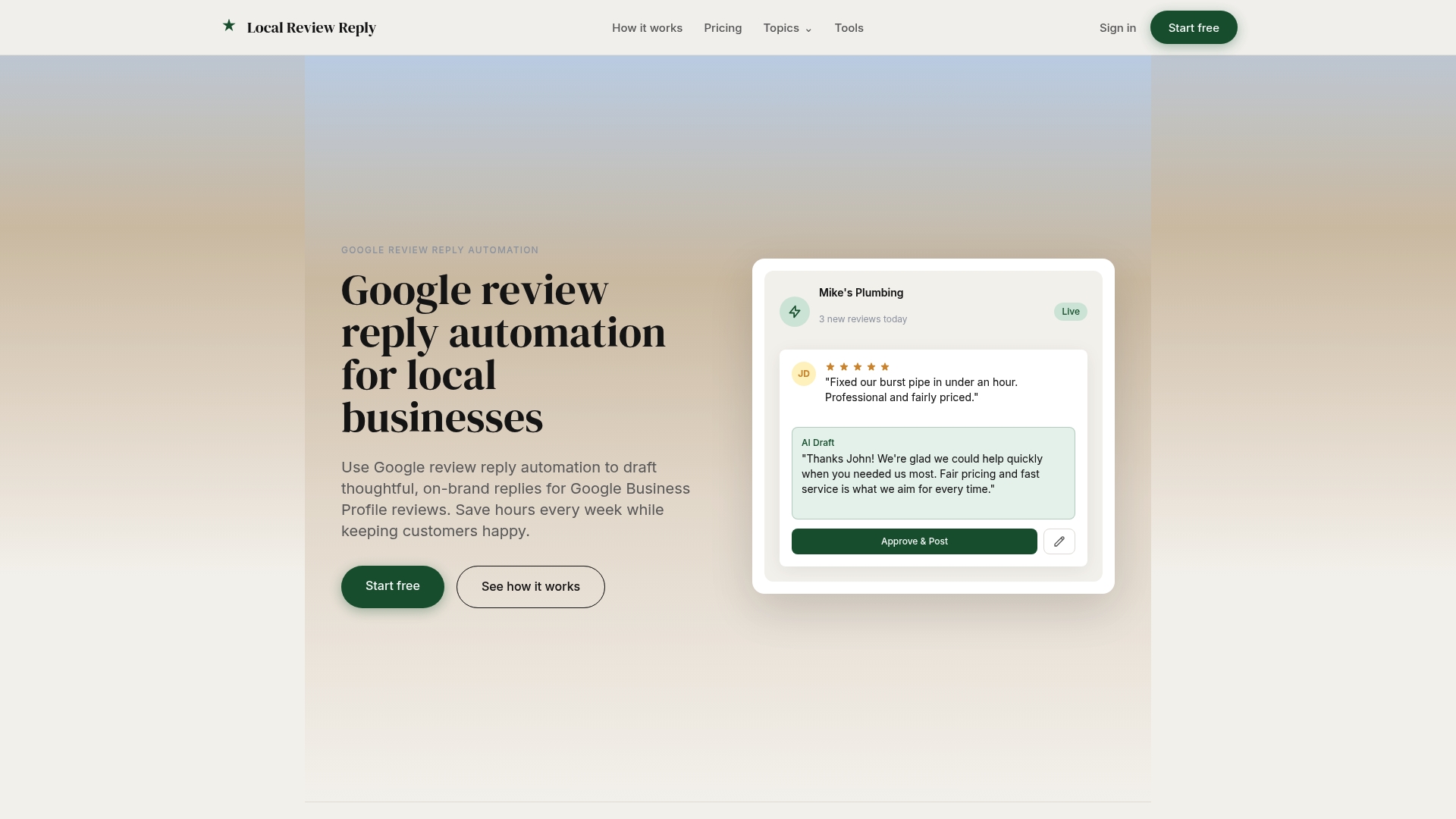
For franchises and multi-location operators, that approval control matters even more, since one bad public reply can ripple across every location under the same name. The franchise workflow case study shows how one operator structured approvals across locations without slowing down response times. If you're ready to see how this fits your situation, start with the Google review management software overview and set up your first location.
Sources
For hands-on troubleshooting, Google's own Business Profile community thread on ownership handoffs and Hyvo's recovery guide both walk through real cases. For governance context, read FMI Corp's take on transition governance. If your business operates a regulated facility, review the EPA's guidance on ownership changes at RMP-covered sites.
- Successful Ownership Transition Requires More Than a Deal ― It Requires Strong Governance | FMI Corp
- Recovering Google Business Profile Review Replies After Ownership Transfer | Hyvo
- Please help. Previous owner not responding to change of ownership and I desperately need it - Google Business Profile Community