The single most important move: personalize the reply with the guest's name and a specific detail (the dish, the date, the server), respond within 24 to 72 hours, and if the review alleges a safety issue like food poisoning or an allergic reaction, keep the public reply short and move the conversation offline immediately. Everything else in restaurant review responses is a variation on that theme. The templates and frameworks below give you the exact language.
TL;DR:
- Respond to safety or allergy-related reviews within 24 hours and handle investigations offline without admitting fault publicly.
- Personalize responses by referencing specific details like dishes or staff names to build trust and loyalty, especially in positive reviews.
- Use a consistent five-step structure for negative reviews, acknowledging the issue, owning it, offering a fix, inviting offline contact, and stopping without over-explaining.
- Prioritize quick, specific replies for serious allegations and detailed complaints, with a goal of same-day response for safety issues and within 24 hours for other concerns.
- Utilize automated drafting tools for routine replies but require human approval for sensitive or negative feedback to ensure tone and accuracy.
Table of Contents
- What Makes Great Restaurant Review Responses
- Negative Review Templates and the Operator Spine
- Neutral and Mixed Review Replies That Win Back Guests
- How to Route Every Review: A Simple Decision Tree
- Timing, Prioritization, and Workflow for Restaurant Teams
- Tone, Safe Language, and a Quick Phrase Bank
- Scaling Replies Without Losing Your Voice
- Publisher Perspective: What We'd Prioritize First
- Scale Consistent Replies With Localreviewreply
- Sources
What Makes Great Restaurant Review Responses
A generic "thank you for your feedback" does nothing for you. It signals to every future diner reading that thread that nobody at the restaurant actually read the review. The goal of any reply is to acknowledge the specific experience, personalize it enough that it doesn't read like a template, and, when something went wrong, own the part that's actually the restaurant's responsibility, then offer a concrete next step.
Positive review replies double as marketing copy for guests who haven't visited yet. Negative ones are damage control and trust-building at the same time, since a timely, specific response signals that you actually care about the guest experience, not just your star rating. Here's how to handle both, plus the messy middle ground of three-star reviews that could go either way.
Positive Review Templates and Fast Personalization
Five-star reviews are low stakes, but that doesn't mean you should waste them. A good positive reply does four things: acknowledges the specific praise, personalizes it, amplifies what the guest liked, and invites them back without sounding desperate. Personal replies that reference a specific detail and sign off with a real name tend to build more loyalty than a copy-pasted "thanks!"
Here are five templates you can adapt in under a minute:
- General praise: "Thanks so much for the kind words, [Name]! We're glad the whole team could make your visit a good one. Hope to see you back soon."
- Dish-specific praise: "So happy you loved the short rib, [Name]. Chef [Name] will be thrilled to hear it. Come back and try the [seasonal dish] next time."
- Staff shout-out: "We passed this along to [Server Name] and the whole crew is smiling. Thanks for taking the time to call it out, [Name]."
- First-time visitor: "Welcome to [Restaurant], [Name]. Glad your first visit checked all the boxes. Ask for [Name] next time and we'll take good care of you again."
- Five stars, no comment: "Thanks for the five stars, [Name]. We appreciate you taking a moment to leave it. See you again soon."
The fastest personalization trick: pull one concrete noun from the review, a dish, a server's name, the occasion, and drop it into the first sentence. That single detail is the difference between a reply that reads as templated and one that reads as read. Sign off with a first name and title (owner, GM, chef) rather than "Management" or the restaurant's logo.
Pro Tip: Keep a running list of staff names and signature dishes pinned near the register or in your review-management dashboard. It cuts personalization time in half when you're clearing a backlog of reviews on a Monday morning.
Negative Review Templates and the Operator Spine
Every credible negative-review reply follows roughly the same five-line structure, whether it comes from a fine-dining operator or a fast-casual chain. Call it the operator spine: name the issue, own what's actually yours, offer a concrete next step, invite the guest to continue the conversation privately, then stop. Replio's operator playbook recommends exactly this structure, and for good reason: it's short enough to write in two minutes and specific enough to read as genuine.
- Name the issue. "I'm sorry to hear your pasta arrived cold."
- Own what's yours. "That's on us. It shouldn't have left the kitchen that way."
- Offer a concrete next step. "I've talked to the kitchen team about ticket timing during the rush."
- Invite offline contact. "Please reach out to me directly at [email/phone] so I can make it right."
- Stop. No further explanation, no defensiveness, no long paragraph justifying the kitchen's Friday-night volume.
Adapt that spine to the complaint type:
- Cold food: Acknowledge, own the kitchen timing, offer to have them back on the house or with a discount, invite direct contact.
- Wrong order: Acknowledge the mix-up, note you're reviewing ticket accuracy with front-of-house, invite them back.
- Long wait: Acknowledge the frustration, be honest about the volume or staffing that night, offer a specific fix (reservations, call-ahead seating), invite return.
- Rude staff: Take it seriously without naming or blaming the employee publicly, note you're addressing it internally, invite the guest to share more detail privately.
- Delivery issues: Separate what's on the restaurant versus the delivery platform, offer to make it right on your end, invite direct contact for platform-specific complaints.
- Allergy or illness allegations: Keep the public reply to two sentences. Acknowledge you take it seriously, provide a private contact, and stop there.
That last category deserves its own rule. When a review alleges foodborne illness or an allergic reaction, don't apologize publicly or admit fault in the comment thread. A public admission can complicate an internal investigation or, worse, a legal claim. The right move is a brief, serious acknowledgment plus a direct line to management, nothing more, in the public reply, then handle the actual investigation entirely offline.
Never argue with a reviewer in public, never disclose another guest's order details or personal information, and never let a manager respond in anger. If a review names a specific employee for misconduct, escalate to HR immediately and keep the public reply generic enough to avoid airing personnel issues in a review thread.
Pro Tip: Screenshot every negative review that alleges a safety issue and attach it to an internal incident report the same day, even if you've already replied publicly. That paper trail matters if the situation escalates.
Neutral and Mixed Review Replies That Win Back Guests
Three-star reviews are the most underused opportunity in restaurant review responses. The guest liked something and didn't like something else, and they're still undecided about whether they'll come back. A thoughtful reply here can tip that decision in your favor more reliably than chasing another five-star review, because you're replying to someone who's still on the fence rather than someone who's already made up their mind.
The template structure for mixed reviews:
- Name the specific issue the guest raised, don't gloss over it with generic positivity.
- Explain, briefly, what you're doing about it (without over-promising a fix you can't guarantee).
- Reference the part of the visit they enjoyed, if they mentioned one.
- Invite them back with something concrete, a specific dish to try, a slower night to visit, a direct line to a manager.
Example: "Thanks for the honest feedback, [Name]. Sorry the wait ran long on a busy Saturday, we're working on better pacing for weekend reservations. Glad the fish tacos landed, though. Come back on a weeknight and we'll get you seated faster."
Keep the tone warm but grounded. Avoid over-apologizing for a moderate complaint, it can make a three-star review read worse than it actually was.
How to Route Every Review: A Simple Decision Tree
Not every review needs the same treatment, and trying to write a bespoke reply from scratch every time is how backlogs happen. A simple routing system speeds up decisions and keeps replies consistent across shifts and locations.
- Praise (4 to 5 stars): Personalize, amplify, invite back. Handle same-day if possible, this is the easiest tier.
- Standard complaint (2 to 3 stars, no safety issue): Apply the operator spine. Acknowledge, own, offer a fix, invite offline contact.
- Serious allegation (illness, allergy, injury, harassment): Brief public acknowledgment only, no admission of fault, immediate private contact, escalate internally same-day.
- Suspected fake or spam review: Don't argue publicly. Flag it through the platform's reporting tools and keep any public reply neutral and factual, correcting an obvious factual error (like wrong hours) without apologizing for something that didn't happen. If a review contains claims that look fabricated or defamatory, document the specifics and follow a structured flagging process rather than engaging in a public back-and-forth.
A short checklist keeps replies from drifting into generic territory: mention at least one specific detail from the review, sign with a real name and role, avoid making public promises you can't guarantee restaurant-wide, and route anything serious to an ops ticket or HR action the same day you reply. If a review names an infestation, pest sighting, or similar operational hazard, treat it as both a public-reply and a facilities issue, loop in your pest control or maintenance provider and document the response, since unaddressed pest complaints can escalate quickly for restaurants if left to sit in a review thread.
Timing, Prioritization, and Workflow for Restaurant Teams
Speed matters, but not evenly across every review. Industry guidance generally recommends a 24 to 72 hour reply window, with same-day response for anything alleging a safety issue or naming a staff member by name.
A simple prioritization rubric for a single location:
- Serious allegations (illness, injury, harassment): same-day, no exceptions.
- Detailed negative reviews (specific complaints, not just low stars): within 24 hours.
- Standard positive and neutral reviews: within 72 hours.
- Low-effort reviews (no text, just a star rating): batch these once or twice a week.
Multi-location operators need a routing layer on top of that rubric: reviews should flow to the general manager at the specific location first, with regional or brand-level oversight only for reviews that mention legal risk, media attention, or repeated staffing complaints across multiple sites. Track reply rate and average time-to-reply as basic metrics, not because a fast reply guarantees a better rating, but because a growing backlog is usually the first sign that review management has slipped down the priority list. Following through on the fix you promised publicly, checking that the ticket-timing issue you mentioned in a reply actually got addressed in the kitchen, is what separates real reputation management from performative apology.
Tone, Safe Language, and a Quick Phrase Bank
Tone should shift with the review type: warm and personal for praise, calm and factual for complaints, careful and minimal for anything with legal exposure. For serious allegations, acknowledge seriousness without admitting fault, and always offer a private channel rather than litigating the incident in the replies.
A short phrase bank for common moments:
- Opening: "Thanks for taking the time to share this, [Name]."
- Empathy: "That's not the experience we want anyone to have."
- Correction without apology: "Just a quick note, we're actually open until 10pm on weekends. Hope to see you soon."
- Private invite: "Please reach out to me directly at [contact] so we can talk through this."
- Sign-off: "[Name], [Title]"
Edit out phrases like "we take this very seriously" repeated across every reply (it starts to read hollow), and cut any line that promises a specific compensation amount in public. Keep that detail for the private conversation.
Pro Tip: Build your phrase bank once, save it in a shared document your whole team can access, and update it quarterly. Consistency across shifts matters more than clever wording.
Scaling Replies Without Losing Your Voice
AI drafting works well for high-volume, low-stakes replies, positive reviews, straightforward complaints, first-pass drafts for a manager to edit. It's a poor fit for anything involving a serious allegation, where a human needs to read the full context, check for legal exposure, and approve the exact wording before it goes public.
Practical safeguards for multi-location teams:
- Require manager approval for any reply below three stars or flagged as sensitive.
- Keep personalization tokens (name, dish, date) editable so drafts don't read as canned.
- Route serious allegations straight to a human, never let a draft auto-post on anything involving safety, illness, or staff conduct.
- Audit a sample of published replies monthly to check for consistency and tone drift.
The pattern that works best treats AI as a drafting assistant, not an autopilot: it clears the backlog of routine replies fast, while a person still reads and approves anything with real stakes.
Publisher Perspective: What We'd Prioritize First
If you can only fix one thing this quarter, fix speed and specificity, not volume. A fast, specific reply to a detailed complaint does more for your reputation than a dozen generic "thanks!" replies to five-star reviews. Track your reply rate and time-to-reply if you want a real signal of whether this is working, but don't chase a number for its own sake. Write every reply as if the next thousand customers will read it before they book a table, because they will.
— Ryan
Scale Consistent Replies With Localreviewreply
Localreviewreply is the practical alternative to manually drafting every review response one at a time, especially once you're managing more than one location. It drafts personalized, on-brand replies for Google Business Profile reviews in seconds, with approval controls that route sensitive or low-star reviews to a manager before anything goes public, exactly the safeguard this article recommends for serious allegations.
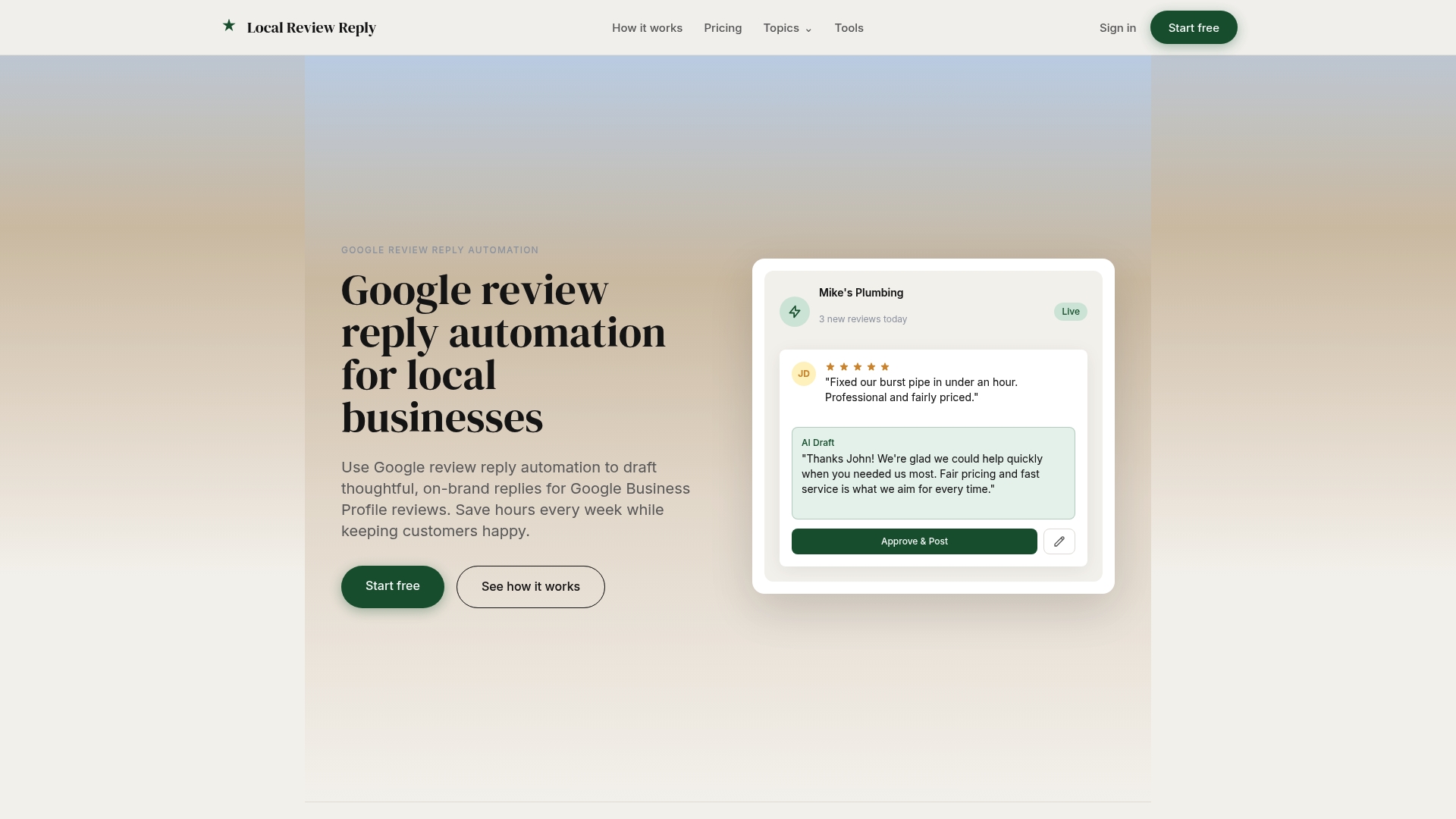
It suits franchises, multi-location restaurant groups, and marketing agencies managing reply volume across several profiles, where hand-writing every response isn't realistic. The trade-off is straightforward: automated drafting speeds up the routine replies, while human approval stays in place for anything that needs a manager's judgment. If you want to see how AI-assisted drafting handles a real review, try the free review response generator or explore the full feature set built for multi-location teams.
Sources
For deeper workflow guidance, see review response guidelines for local businesses, hotel review reply templates for cross-industry ideas, and review response analytics for tracking reply rate and time-to-reply.
- How to Respond to Bad Restaurant Reviews: A Step‑by‑Step Guide for Restaurant Operators
- How to Respond to a Negative Restaurant Review (Real Examples, 2026)
- 25+ Restaurant Review Response Examples (Copy & Use) | LBH
- How to Respond to Negative Restaurant Reviews | Beyond Menu